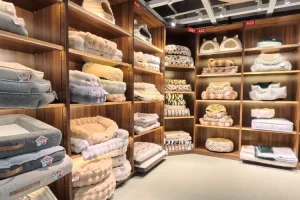
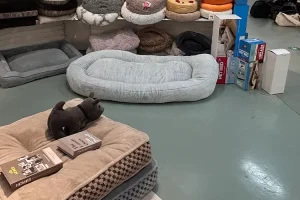
In global volume distributions, shifting consumer preferences indicate that pet owners increasingly look for products that support cold-weather thermal comfort. As a result, sustainable self-warming pet beds have emerged as a high-margin, hyper-growth category across North America, the United Kingdom, Germany, and other mature corporate pet networks.
For high-street retailers, global distributors, and contract private-label brands, integrating a premium self-heating pet beds program offers a lucrative inventory opportunity by capturing additional warmth without requiring electricity. Compared with high-maintenance electric alternatives, these passive non-electric warming configurations are significantly easier to ship, simpler to cross-merchandise on retail shelves, and eliminate strict western electronic compliance liabilities.
Understanding the material physics behind these product lines is a strict operational foundation for enterprise sourcing teams evaluating next-season winter cat collections, orthopedic bedding programs, and bespoke private-label fabricante de camas ecológicas para cães catalogs.
Why Self-Warming Pet Beds Are Becoming a Year-Round Sourcing Category
Many sourcing teams still view warm pet beds as seasonal products. In reality, product development cycles often begin six to twelve months before winter demand peaks.
Large retailers, online sellers, and pet specialty chains typically finalize product selections long before the selling season begins. This is why manufacturers often receive sourcing inquiries for winter dog beds and self-heating cat beds during spring and summer.
At the same time, aging pet populations are creating additional demand for warm sleeping surfaces. Senior dogs and cats often benefit from improved thermal comfort, making self-warming pet beds relevant beyond traditional winter sales periods.
Because these products do not require electricity, they can also be sold in markets where buyers prefer lower-risk alternatives to electric heating systems.
How Self-Warming Pet Bed Work
The principle behind self-heating pet beds is surprisingly simple.
Instead of generating heat, self-warming beds retain and redirect the pet’s natural body warmth.
Because specialized thermal materials reflect radiant heat back toward the sleeping surface, less heat escapes into the surrounding environment. The result is a warmer resting area without any external power source.
This approach differs significantly from electric heated pet beds.
Electric beds actively generate warmth through heating elements, while self-warming products improve thermal retention using advanced material construction.
For many retailers, this distinction is important because it reduces electrical safety concerns while still providing a noticeable comfort benefit.
Far-Infrared Fiber Technology
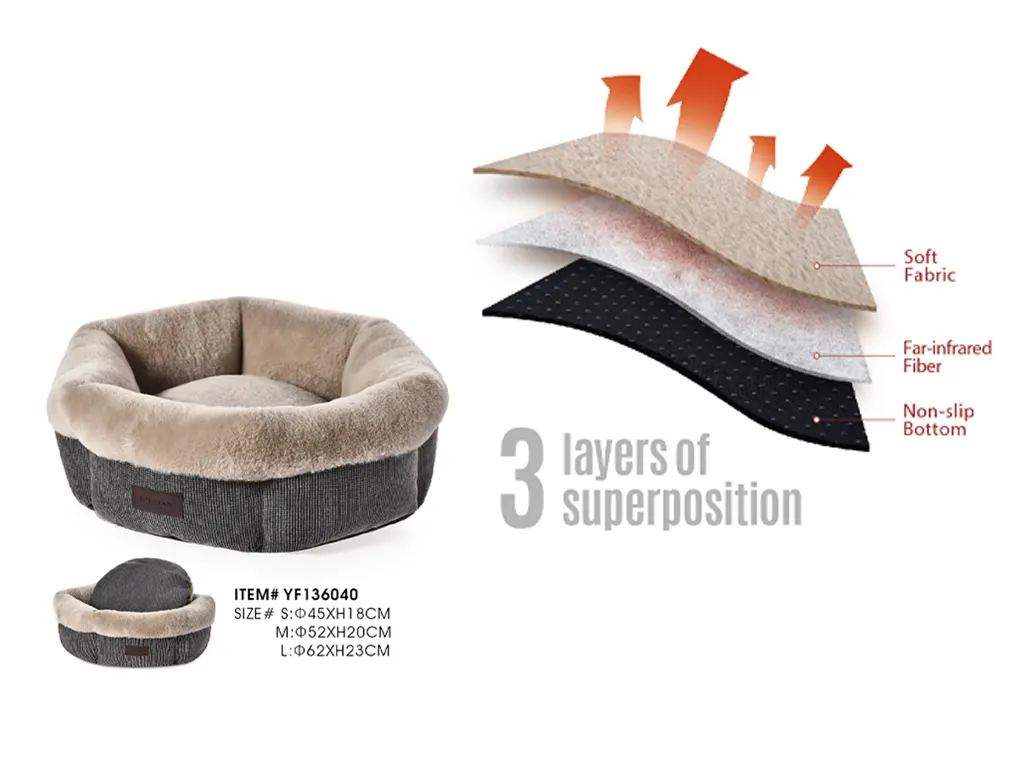
One of the most advanced self-warming solutions currently used in pet bedding is far-infrared fiber technology.
These beds generally use a three-layer construction:
- Soft surface fabric
- Far-infrared fiber layer
- Fundo antiderrapante
Because far-infrared fibers help capture and redistribute body heat more efficiently, they can significantly improve thermal performance compared with conventional bedding materials.
Laboratory thermal resistance comparisons illustrate the difference:
| Material | Thermal Resistance |
|---|---|
| Regular Pet Bed | 4.22 clo |
| Noise-Free Thermal Foil Bed | 5.57 clo |
| Far-Infrared Fiber Bed | 7.05 clo |
Higher thermal resistance values indicate improved insulation performance.
As a result, far-infrared fiber technology is increasingly used in premium self-heating dog beds, specialized camas ortopédicas para animais de estimação, and luxury winter pet collections.
For brands targeting higher-value product categories, this technology often supports stronger product differentiation than standard bedding materials.
Noise-Free Thermal Foil Technology
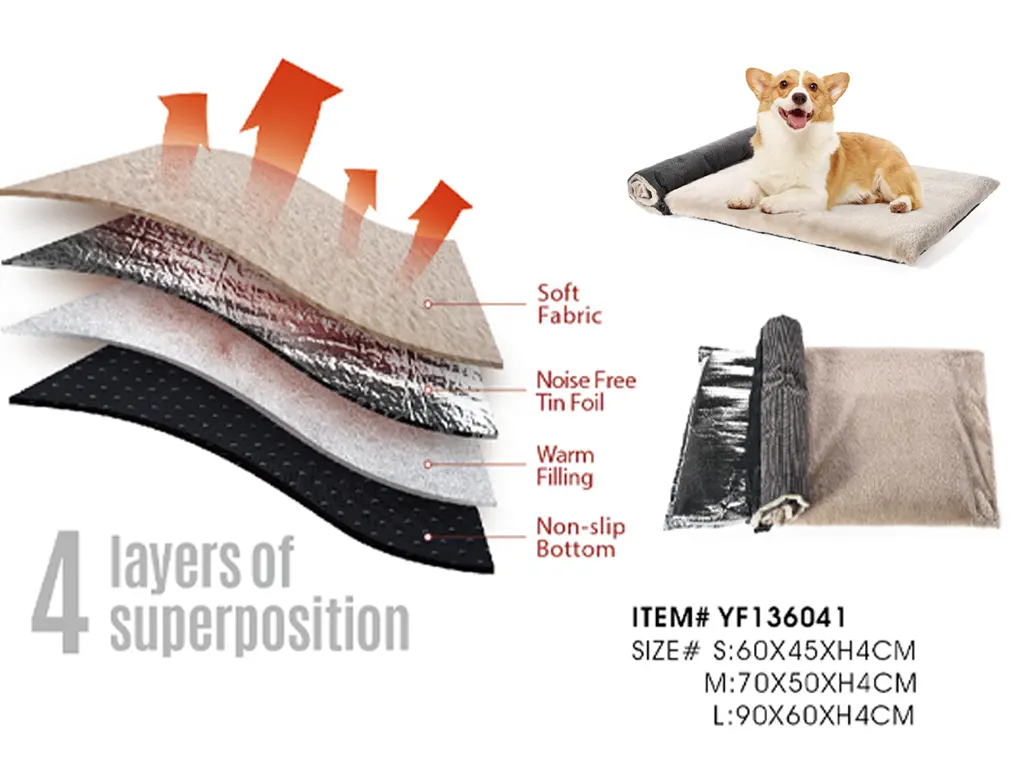
Another common self-heating solution uses reflective thermal foil.
Traditional thermal foil products sometimes create a crinkling sound when pets move. Many consumers find this noise undesirable, especially for nervous dogs or cats.
To address this issue, newer generations of self-warming pet beds use noise-free thermal foil structures.
Typical construction includes:
- Soft outer fabric
- Noise-free thermal foil layer
- Warm filling material
- Non-slip base
Because reflective thermal barriers redirect the pet’s own body heat back toward the sleeping surface, these products can improve warmth retention without electricity.
The combination of improved insulation and reduced noise makes this technology particularly attractive for cat beds, small dog beds, and indoor pet furniture.
For sourcing teams evaluating private-label collections, noise-free thermal foil often provides a strong balance between performance and cost.
Self-Warming vs Electric Heated Pet Beds
Retail buyers frequently compare camas para cães com aquecimento automático com electric heated pet beds alternatives.
While both categories aim to improve comfort, their sourcing considerations differ significantly.
| Caraterística | Self-Warming Pet Beds | Electric Heated Pet Beds |
|---|---|---|
| Power Required | Não | Sim |
| Operating Cost | None | Electricity Required |
| Safety Complexity | Lower | Higher |
| Shipping Restrictions | Minimal | May Vary By Market |
| Certification Requirements | Lower | Higher |
| Manutenção | Minimal | Electrical Components |
| Typical Retail Positioning | Mass Market | Premium Segment |
For many distributors and retailers, self-warming beds represent a lower-risk category because they eliminate electrical components while still delivering meaningful thermal benefits.
Electric heated beds, however, remain attractive for specialty retailers targeting senior pets, cold-climate regions, and premium pet care segments.
How Buyers Evaluate Heated Pet Bed Safety
Safety remains one of the most important considerations when sourcing heated pet bedding products.
Para electric heated cat beds, many markets require compliance with electrical safety standards and low-voltage design principles.
Common buyer concerns include:
- Temperature control stability
- Overheating prevention
- Low-voltage power systems
- Waterproof protection
- Chew-resistant cable construction
- Product durability
Modern electric heated pet beds often use USB-powered or low-voltage DC systems to reduce risk.
Many premium models also incorporate temperature sensors that help maintain consistent heat output.
For products intended for dogs, chew-resistant cable protection has become increasingly important. Some manufacturers utilize reinforced cable designs, including stainless-steel protective structures, to improve durability and reduce damage caused by chewing behavior.
These safety features are frequently evaluated during product qualification and supplier selection processes.
Which Warming Technologies Are Growing Fastest?
The global market is no longer limited to a single warming solution.
Instead, buyers increasingly evaluate several distinct technologies depending on target customers and price positioning.
1. Far-Infrared Fiber
Often used in premium collections due to strong thermal performance and comfortable fabric construction.
2. Noise-Free Thermal Foil
A cost-effective self-warming solution suitable for large-volume retail programs.
3. Microwave Heating Stone Systems
These systems use removable heating packs that can be briefly warmed in a microwave before being inserted into the pet bed.
Because they provide temporary active warmth without electrical components, they are attracting interest in niche markets.
4. Electric Heating Systems
Still popular in senior pet care, orthopedic products, and cold-weather regions where higher heat output is required.
Many newer models now feature removable heating elements, washable covers, and USB-powered operation to improve convenience.
How Sustainable Materials Are Influencing Warm Pet Bed Development
An emerging trend is the combination of warming technology with sustainable materials.
Many sourcing teams are seeking alternatives that balance comfort, environmental responsibility, and long-term compliance requirements.
For example, recycled PET pet beds continue to gain popularity because they help brands support circular economy initiatives while maintaining competitive pricing.
Brands seeking waterproof winter collections increasingly explore alternative material solutions that move away from traditional chemical coatings and toward more sustainable material platforms.
Meanwhile, premium product lines are beginning to combine thermal performance with advanced bio-based textiles, creating opportunities for higher-margin pet bedding collections.
As sustainability expectations continue to rise, warming performance and environmental responsibility are becoming complementary product attributes rather than separate purchasing decisions.
Conclusão
Self-warming pet beds are no longer niche products reserved for winter promotions.
They have evolved into a year-round sourcing category that addresses thermal comfort, aging pet populations, and changing consumer expectations.
Because self-heating technologies rely on heat retention rather than active power generation, they offer retailers a practical way to introduce warming functionality while minimizing safety complexity and compliance challenges.
For brands, distributors, and importers evaluating future pet bedding programs, understanding the differences between far-infrared fibers, noise-free thermal foil systems, microwave heating solutions, and electric heated technologies will become increasingly important as the category continues to evolve.
Self-heating cat beds use reflective thermal layers or far-infrared materials that redirect a cat’s body heat back toward the sleeping surface.
Yes. They do not generate heat but improve thermal retention, helping pets remain warmer than they would on conventional bedding.
Generally, yes. Because they do not use electricity, self-warming beds have fewer safety considerations than electric heated products.
Thermal foil primarily reflects body heat, while far-infrared fibers improve heat retention through specialized fiber technology and typically offer higher insulation performance.
The answer depends on target customers. Self-warming technologies are often preferred for mass retail programs, while electric heated beds are commonly positioned as premium products.
To support scaling pet product brands, Amazon aggregators, and retail distributors, our fábrica de camas para animais de estimação sets an accessible entry line MOQ of 300 unidades por modelo, cor e tamanho. Standard mass production lead times for fully customized private-label heated or self-warming bedding lines average 30 to 45 days, depending on fabric dye-lot requirements and sea container consolidation logistics.
Partilhar
Categoria de produtos
Artigos recentes
Custom Dog Bed Development: From Reference Image to Production
Dog Crate Mat Size Guide for Wholesale & Private Label Buyers
Contactar o fabricante
Também pode gostar