B2B procurement guide for dog blankets: Everyday Retail: 220–300 GSM polyester fleece; Calming/Winter: 300–400 GSM sherpa; Gift/Boutique: 300+ GSM velvet (AATCC 8 Grade 4+ rub fastness); Permanent Pattern: Jacquard (woven yarn-dyed); Incontinence/Travel: 3-layer TPU membrane (≥2,000mm H2O, ISO 811 / AATCC 127).
There is no single best fabric for a dog blanket. The material that wins your program depends on three things: the shelf you are aiming at, what the dog actually does with the blanket, and how often it needs washing. For most everyday retail programs, polyester fleece in the 220–300 GSM range is the safest volume choice. Sherpa adds warmth and a den-like feel for winter and calming lines. Velvet carries a gift-box price point. Jacquard holds its pattern for the life of the fabric, because the design is woven in, not printed on. And any blanket sold as waterproof should come with a hydrostatic head number — ideally above 2,000 mm H2O — because “water-resistant” and “waterproof” are two different claims, and the difference matters the night a senior dog has an accident.
We have been manufacturing dog blankets across all key fabric categories—fleece, sherpa, velvet, jacquard, and waterproof composites—since 1998. This guide is the short version of what we walk buyers through during sampling — with the numbers we ask them to check before they commit to a PO.
The Comparison Chart
Six material families cover almost every dog blanket program we run. Here is how they stack up against each other.
| Material | Warmth | Hand feel | Claw & wear | Washing behaviour | Typical weight | Best fit for |
|---|---|---|---|---|---|---|
| Regular fleece | Medium | Smooth, brushed | Moderate | Machine wash, keeps shape | 150–300 GSM | Everyday retail, promos |
| Sherpa fleece | High | Deep curled pile | Moderate — pile can shift | Machine wash, no high heat | 300–400 GSM | Winter lines, calming |
| Printed plush | Medium | Soft, flat pile | Moderate | Colours soften slowly over cycles | 200–300 GSM | Trend prints, seasonal drops |
| Velvet | Medium–high | Dense, short pile | Lower — pile shows wear | Gentle cycle, inside out | Typically 300+ GSM | Gift boxes, boutique retail |
| Jacquard | Medium | Textured woven relief | High | Gentle machine wash | Commonly 280–450 GSM | Premium programs |
| Waterproof composites | Shell-dependent | Corduroy or plush face | High | Wipe-clean or gentle cycle | 3-layer build | Senior dogs, travel, shelters |
Weight ranges reflect common industry practice for finished pet blankets rather than any single product spec. Always confirm GSM per style before pricing.
Fleece: The Volume Seller
Polyester fleece is the workhorse of the category. It knits, brushes and finishes into a soft cut pile that dries fast, holds its shape through hundreds of wash cycles, and takes dye well enough to hit almost any brand palette. If you are launching a first blanket program and do not want to gamble, start here.
The number that decides everything is GSM — grams per square metre. Fleece splits into three practical tiers:
- 150–180 GSM — lightweight. Picnic blankets, giveaways, travel throws, price-entry lines.
- 220–300 GSM — the all-season core. Most successful retail programs live here.
- 300–400 GSM — winter weight. Substantial in the hand, warm, and the tier where anti-pill treatment stops being optional.
One warning from the inspection floor: GSM overstatement is the most common cheat in this category. A spec sheet says 300; you cut a square metre and weigh it, and it reads 265. The blanket feels thinner in store and the returns say “cheap.” The fix costs you nothing — weigh the finished blanket on a kitchen scale and divide by its area in square metres. A spec sheet is a claim. A scale is a fact.
Care instructions drive repeat purchases: cool wash, liquid detergent, no softener, low heat. If your range leans wash-heavy — shelters, boarding, grooming — the constructions on our washable dog bed manufacturer page apply the same wash-durability logic.
Sherpa Fleece vs Regular Fleece
Sherpa is fleece grown long. The pile is taller and curled so it mimics shearling, and that single difference changes what the blanket is for.
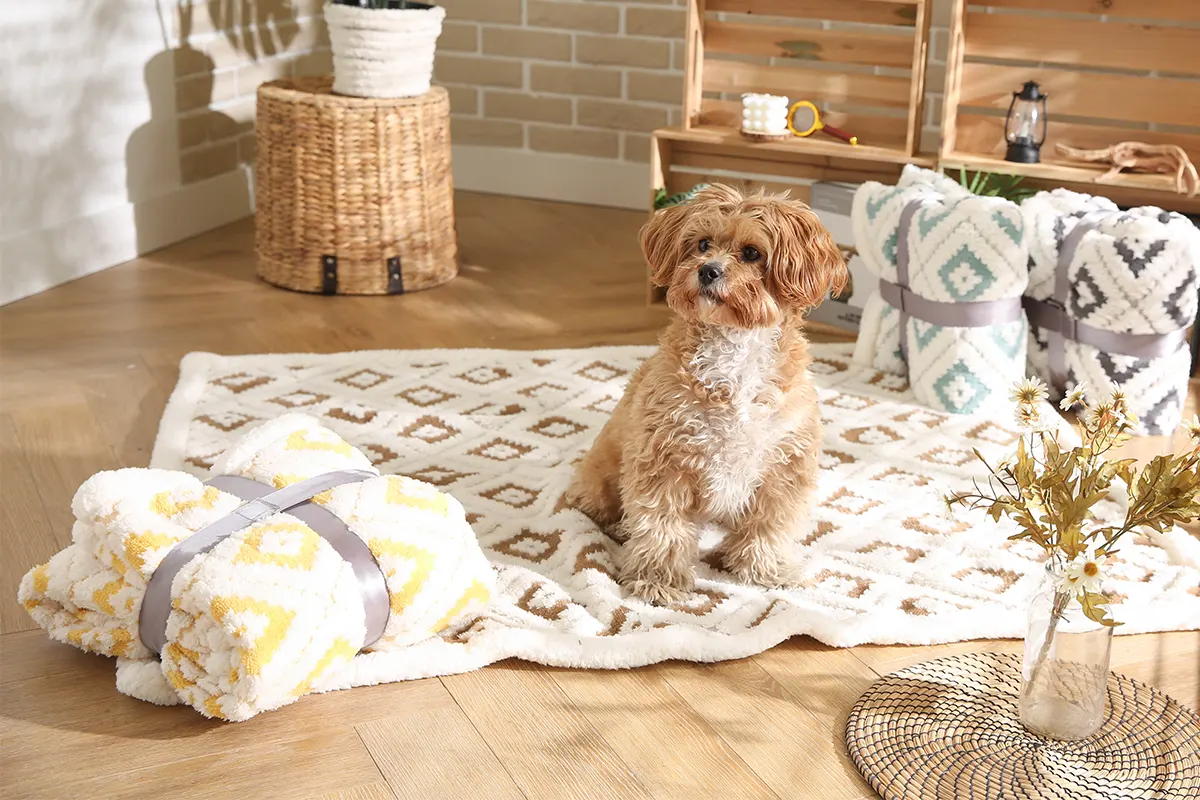
Warmth-per-gram goes up — a deep pile traps more still air than a flat brushed surface. But the bigger story is behaviour. Deep pile gives dogs something to burrow into and root around in with their nose, the way puppies root against a mother’s coat. In our experience most anxious dogs settle faster on sherpa than on any flat fabric, which is why calming-donut and anti-anxiety lines overwhelmingly use it. If your brand story involves anxious dogs, rescue animals, or winter comfort, sherpa is the fabric that supports the claim.
The trade-offs are manageable but real. Sherpa mats if you dry it hot, so the care label has to say low heat. And it sits a price tier up from regular fleece, because there is more yarn in it. When a competitor’s price looks too good, check whether the pile is actually sherpa or regular fleece with a strong marketing adjective.
 Click to inquire
 Velvet: The Premium Look
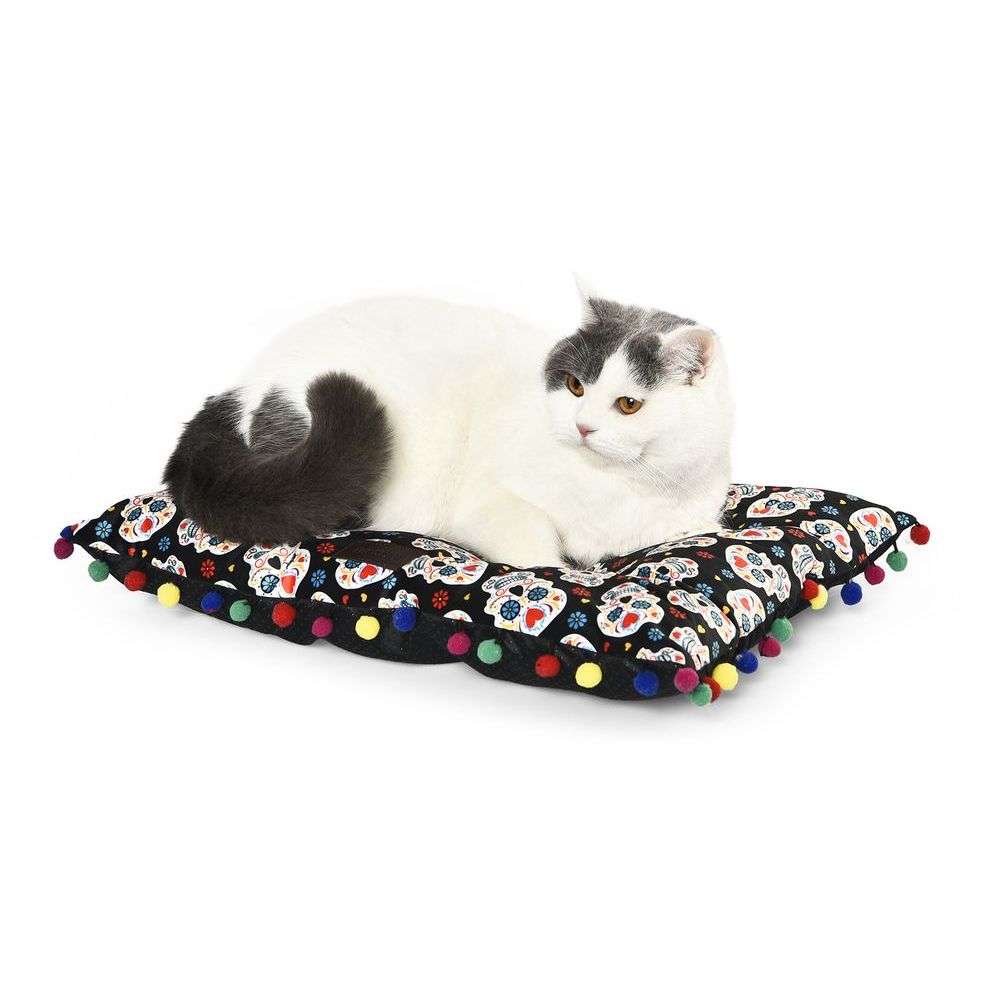
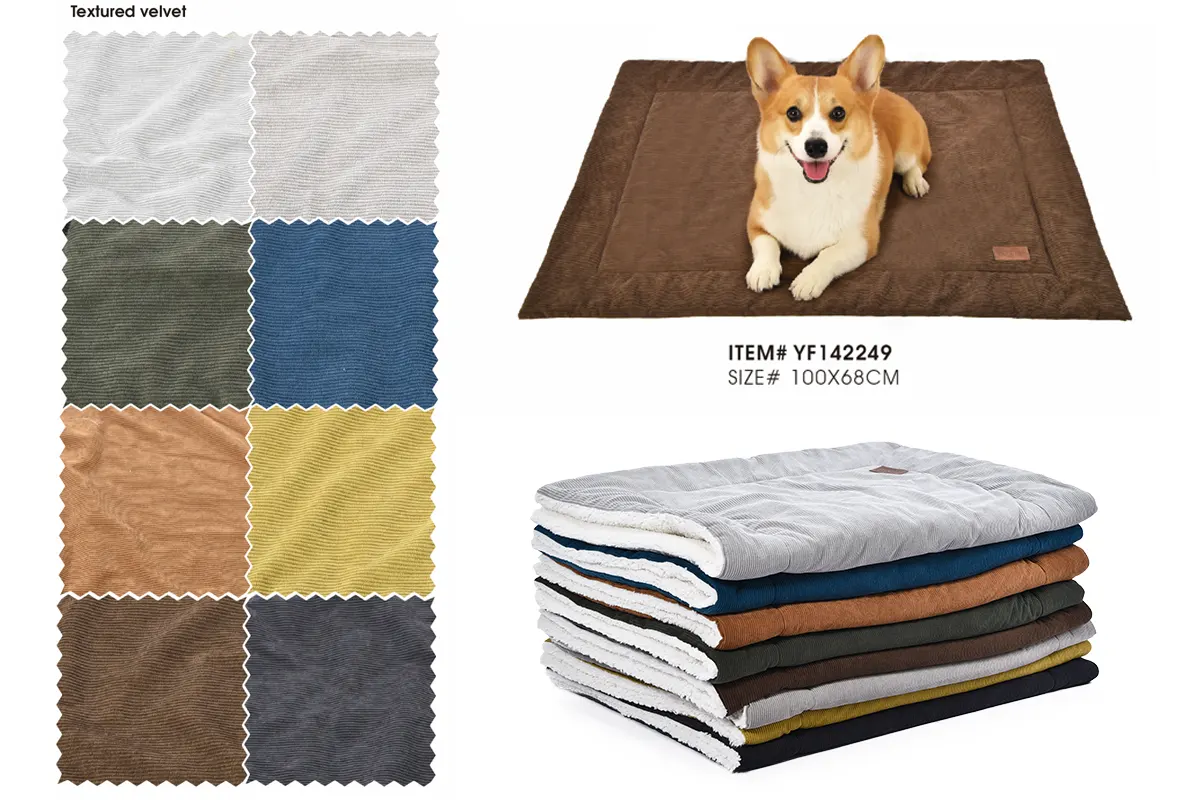
Velvet is the shelf-appeal fabric. The pile is short, dense, and uniform, so it photographs richly and reads as a step up the moment a customer touches it. We run it in two finishes — a smooth matte face for solid colour programs, and an embossed texture that adds a pattern without printing. Velvet blankets earn their keep in holiday gift boxes, boutique assortments, and any line where the blanket itself is the present.
The spec to hold firm on is colour fastness to rubbing. A dog blanket does not hang quietly on a wall — it gets dragged across sofas, car seats, and carpets all day, and velvet’s high pile surface means more contact and more transfer risk than flat weaves. The tests are AATCC 8 in the United States and ISO 105-X12 internationally, both graded on a 1–5 grey scale. For anything that will touch light-coloured furniture, look for dry rubbing at Grade 4 or better, and wet rubbing at Grade 3 or better. Deep navy and burgundy velvets are where we see most transfer complaints when this spec gets skipped.
One production detail most buying guides never mention: pile direction. Velvet fibres all lie one way, and two panels cut in opposite directions shade differently under light. It is invisible on the cutting table and obvious on the retail shelf. Hold samples under an angled lamp and turn them — any panel that flips dark-to-light is a nap-direction defect, and a lot cheaper to catch at sampling than at destination.
 Click to inquire
 Jacquard: Pattern That Won’t Wash Out
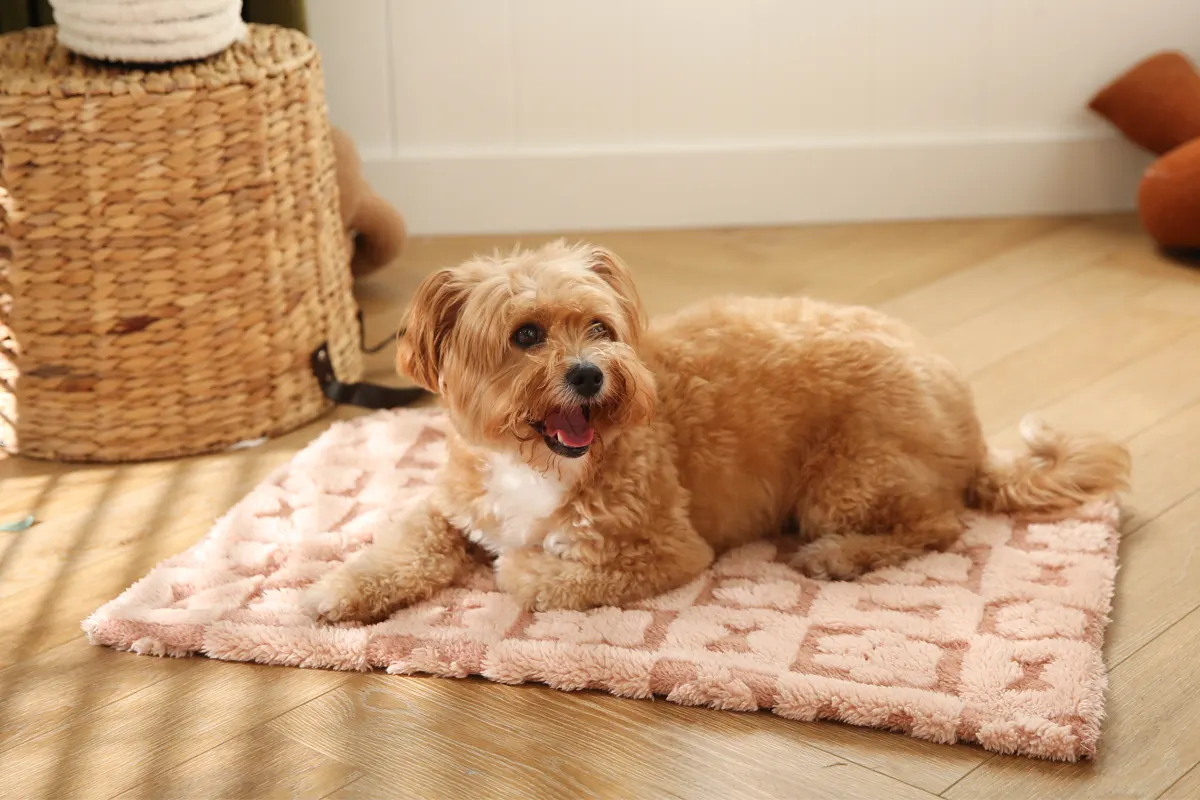
A printed pattern is ink sitting on top of the cloth. A jacquard pattern is the cloth — the design is woven on looms that control individual warp yarns, and the yarns are dyed before weaving, not after. That difference plays out every wash cycle. Print fades because the ink layer slowly gives up; jacquard cannot fade its pattern because there is no layer to give up. The yarn is the colour. Short of physically wearing the blanket out, the pattern is permanent.
You can verify this in two seconds at a fabric fair. Flip the sample over. A jacquard shows the pattern reversed on the back, because the design runs through the full structure. A print shows a blank or faintly stained back. It is the single most useful trick for catching suppliers who photograph jacquard and ship print.
Honest trade-offs, because there are a few: jacquard colourways are tonal and restrained compared to digital print, which can hit photographic detail and unlimited colours. If your line needs a photorealistic dog face on the blanket, print is the right tool. If your line needs a pattern that still looks sharp after a season of weekly washing — paw prints, geometrics, herringbone — jacquard earns its premium, and it does command a premium over printed constructions. Custom development needs loom time, so it suits committed volumes more than fast-turn experiments.
For a sense of the look, our paw print jacquard runs the pattern at a scale that reads from across a store aisle — tonal colours, no print to fade.
 Click to inquire
 Waterproof Fabrics: Reading the Numbers
This is the section where buyers get sold the wrong thing most often, so we will go slowly.
Waterproof performance is measured as hydrostatic head, in millimetres of water column (mm H2O). The test is simple: a lab clamps the fabric, presses a column of water against it, and records the height at which water forces through. The international test method is ISO 811; the US equivalent is AATCC 127, and JIS L 1092 is the Japanese method. Same principle, same unit, so numbers are comparable across suppliers.
What the numbers mean in practice
- Under ~1,500 mm — water-resistant territory. Beads light spills and drizzle; not a membrane barrier. In UK market convention, this is below the floor for using the word “waterproof.”
- 2,000–3,000 mm — holds up to resting liquid and steady pressure. This is the realistic dog scenario: a dog lying on a wet spot presses water through fabric the same way a knee presses water through a tent floor.
- 5,000 mm and up — heavy-duty outdoor gear territory. Usually stiffer and less cuddly than a dog blanket needs to be.
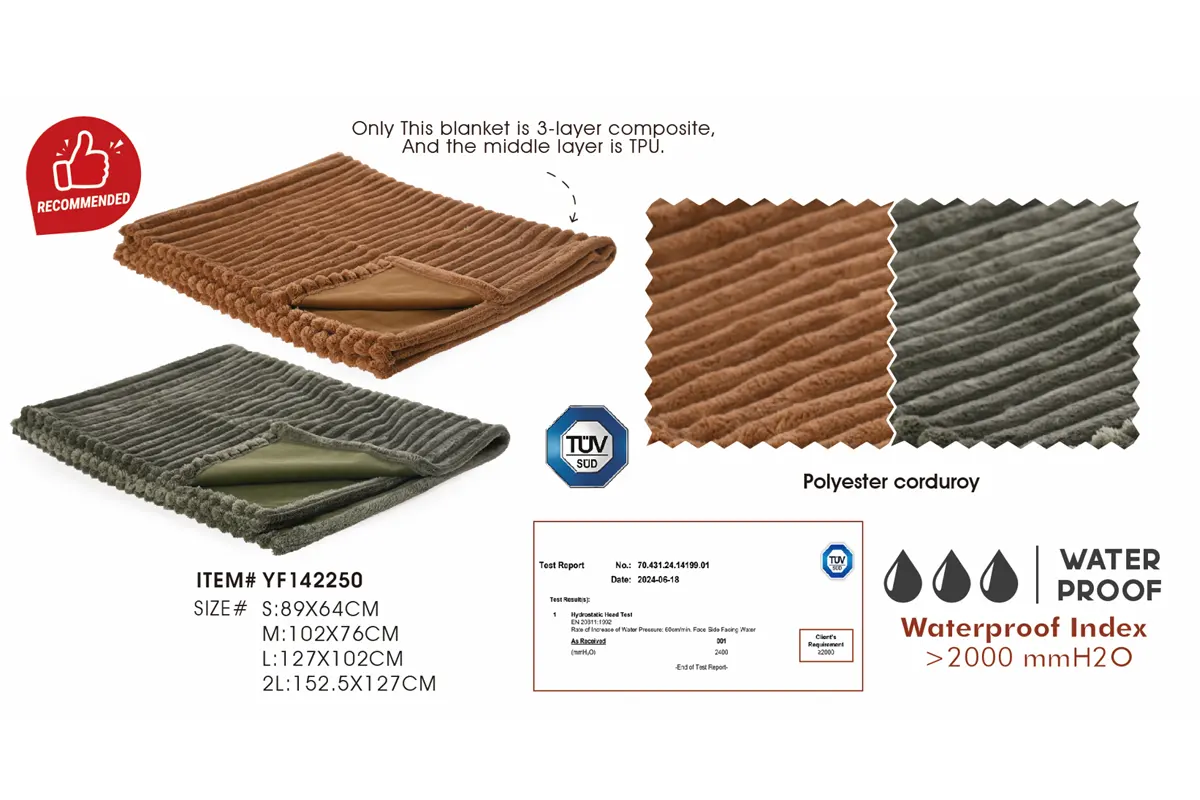
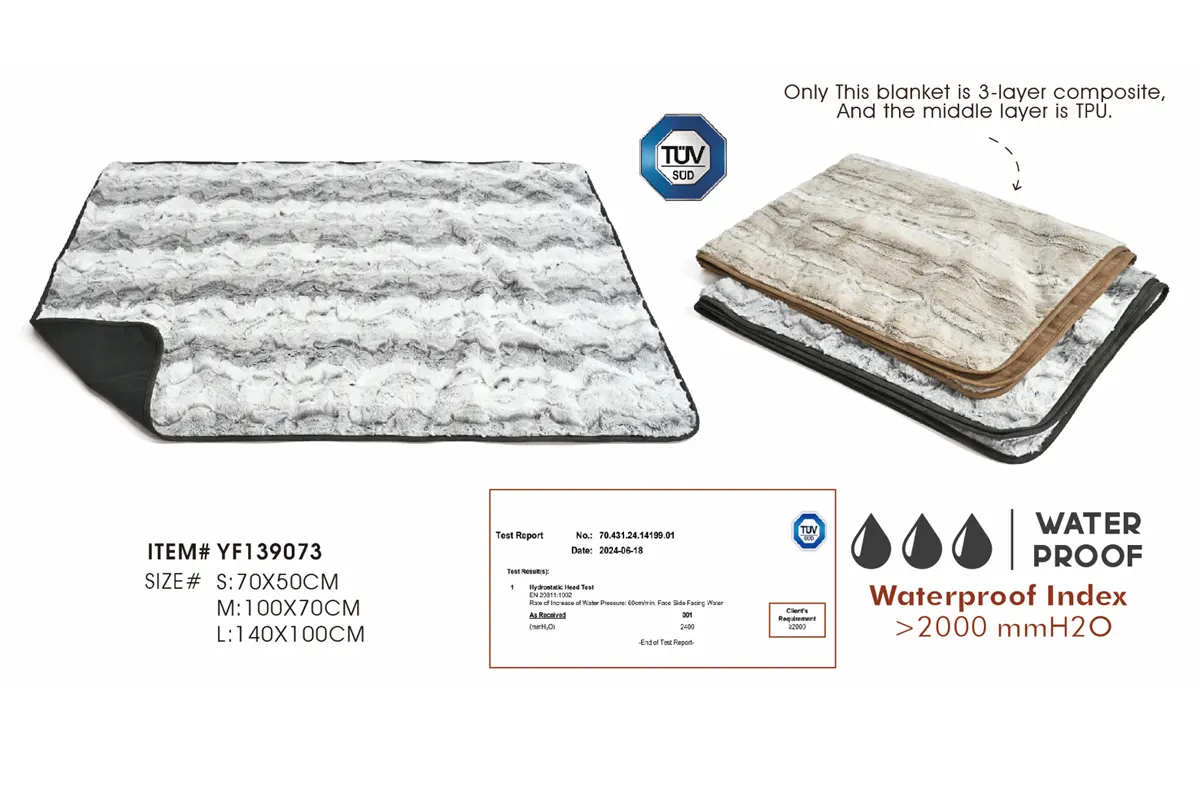
Construction matters as much as the number. A single coated fabric has a finish that can wear and wash out. A three-layer composite — face fabric, TPU membrane in the middle, backing — keeps the barrier protected inside the sandwich, and that is the construction behind our own water-resistant lines: a corduroy-faced style and a reversible faux-leather-and-plush style, both tested above 2,000 mm H2O with TUV reports available.
Two more things to check before you sign off on a waterproof program:
Seams. The fabric can hold 3,000 mm while the blanket still leaks, because a needle hole is a needle hole. Ask how the seams are handled — lapped construction, binding, or taping — especially for styles that will face repeated accidents.
Paperwork. Ask any supplier two questions: what is the tested hydrostatic head figure, and under which standard? If the answer is a smile and the word “waterproof” with no number, you are buying a coating, not a membrane. If your program leans entirely toward the wet end of dog life, the dedicated constructions on our waterproof dog bed manufacturer page go a step further than blankets.
 Click to inquire
  Click to inquire
 What GSM Actually Means
GSM is grams per square metre — the weight of the fabric itself, not the finished blanket. It is the fastest single indicator of quality tier, cost, and shipping weight, and it is the number most worth arguing about with a supplier.
What GSM is not is a warmth guarantee. Warmth comes from trapped air, and trapped air depends on pile height and fibre fineness as much as weight. A 300 GSM sherpa with a deep pile is warmer than a 300 GSM flat construction, full stop. A listing that leads with a big GSM number and no mention of pile deserves scepticism — the swatch is the verdict.
The scale test from the fleece section works for every material in this guide: weigh the finished blanket, divide by its area, and compare against the spec sheet. Discrepancies above about five per cent deserve a conversation.
How to Choose: Three Questions
Every sourcing meeting we run comes down to three questions. Answer them in order and the fabric picks itself.
1. Where will it sell?
Mass and supermarket channels reward lightweight fleece and printed plush in the 150–250 GSM range — price per unit and container fill win the listing, and lighter dog mat constructions compete in the same slot. Pet specialty and online D2C brands sit in the 220–300 GSM fleece and sherpa tier, where reviews mention softness and wash survival. Gift and holiday programs want velvet or jacquard, boxed, with a private-label patch or woven brand mark.
2. How does the dog use it?
Chewers destroy long pile eventually, so give them tight weaves and composites, not sherpa. Senior dogs and incontinence cases need the waterproof composite — accidents are a product feature here, not an edge case. Anxious dogs and puppies go to sherpa for the den effect. Outdoor and travel use wants quick-drying fleece or a wipe-clean waterproof face, because a soaked blanket that stays soaked is a mildew complaint.
3. How will it ship?
Vacuum and roll compression save serious container volume, and most fleece programs compress without complaint. High-loft sherpa is the exception — months under compression can flatten the pile permanently, so ask for a compression-recovery sample if your program ships rolled. Boxed velvet and gift styles protect their own pile but pay for it in shipping volume. The shipping question decides margin as often as the fabric question does.
Almost every combination of the three answers already exists as a production-ready construction. The custom dog blanket manufacturer page lists current styles, MOQs, and how sampling works.
Frequently Asked Questions
Still Weighing Two Fabrics?
Order a swatch card. Feeling the pile, the weight, and the waterproof face side by side settles fabric debates faster than any spec sheet — and swatches ship before you commit to anything.