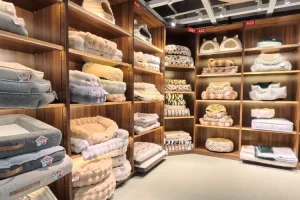
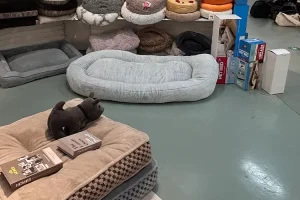
Choosing the right large dog bed size for B2B sourcing requires more than selecting an XL or XXL label. Finished dimensions need to be evaluated together with bed shape, filling system, thickness, target price point and packaging method. In actual OEM development, buyers may start with exact dimensions, a competitor sample, a target breed or weight range, an Amazon or Chewy reference, or an existing factory model.
Answer First: A practical large dog bed specification is built around the actual product, not a universal “dog length + X cm” formula. When dimensions are already defined, the factory reviews whether the requested size works with the proposed construction and filling. When the buyer needs a recommendation, mature Large, 2L or 3L factory models can provide a starting point for sampling.
How B2B Buyers Specify Large Dog Bed Sizes
Large dog bed development usually starts from one of several different types of buyer input. These routes can all lead to a workable product, but they do not require exactly the same sizing process.
- The buyer provides exact finished dimensions.
- The buyer provides a competitor product or reference specification.
- The product range is being developed around a target dog breed.
- The buyer defines a target dog weight range.
- The buyer provides an Amazon, Chewy or other retail-market reference.
- The buyer asks the factory to recommend an existing model and size from the catalog.
When the Buyer Already Has Dimensions
If a buyer requests a 120 × 85 cm dog bed, the next question is not simply whether that dimension is “large enough.” From a manufacturing perspective, we first need to understand what is supposed to be built at that size.
A 120 × 85 cm flat mattress, a rectangular bolster bed and a PP-cotton sofa bed can have similar external length and width while requiring different filling quantities, thicknesses and construction methods.
If that combination is practical, the project can move to sampling. If the specification creates an obvious structural or cost problem, it is more efficient to adjust it before the sample is produced.
When the Buyer Needs a Size Recommendation
Not every private-label buyer arrives with a complete specification. In those projects, we normally start with existing catalog models that already have established production sizes. Large, 2L or 3L versions can then be reviewed against the buyer's target assortment before fabric, color, branding, filling and packaging are customized.
Large Dog Bed Dimensions: Real Factory Size References
The safest way to interpret M, L, 2L or 3L is to check the actual finished dimensions behind the label. These size names are useful inside a specific product series, but they should not replace dimensional specifications during RFQ comparison.
For example, ITEM YF147022 uses the following production size range:
| Item | Maat | Finished Dimensions |
|---|---|---|
| YF147022 | M | 80 × 55 × H14 cm |
| YF147022 | L | 100 × 70 × H14 cm |
| YF147022 | 2L | 120 × 85 × H14 cm |
These are factory production dimensions, not breed-specific recommendations. The appropriate size for a retail program still depends on product structure, target positioning and the buyer's intended market.
For wholesale sourcing, this means that a statement such as “we need an XL dog bed” is not yet a complete specification. The actual finished dimensions are the more reliable starting point.
Why L, 2L and 3L Are Not Universal Dog Bed Dimensions
L, 2L, 3L, XL and XXL should be treated as merchandising labels rather than complete manufacturing specifications. Even within one manufacturer's product range, two different constructions can use different dimensions under the same size label.
A second production example is ITEM YF125128, a bolster bed using PP-cotton filling and positioned toward a more cost-conscious program.
| Maat | Finished Dimensions | Bouw | Filling Positioning |
|---|---|---|---|
| S | 61 × 48 × H18 cm | Versterken Bed | PP Katoen |
| M | 75 × 58 × H19 cm | Versterken Bed | PP Katoen |
| L | 90 × 70 × H20 cm | Versterken Bed | PP Katoen |
| 2L | 110 × 85 × H22 cm | Versterken Bed | PP Katoen |
| 3L | 130 × 100 × H24 cm | Versterken Bed | PP Katoen |
Compare its 2L at 110 × 85 × H22 cm with YF147022 at 120 × 85 × H14 cm. Both can be called 2L within their respective ranges, but the products are not dimensionally identical.
Buyer takeaway: instead of requesting only “a 2L dog bed,” specify the actual dimensions together with construction, filling, fabric and packaging requirements. This reduces ambiguity before quotation and sampling.
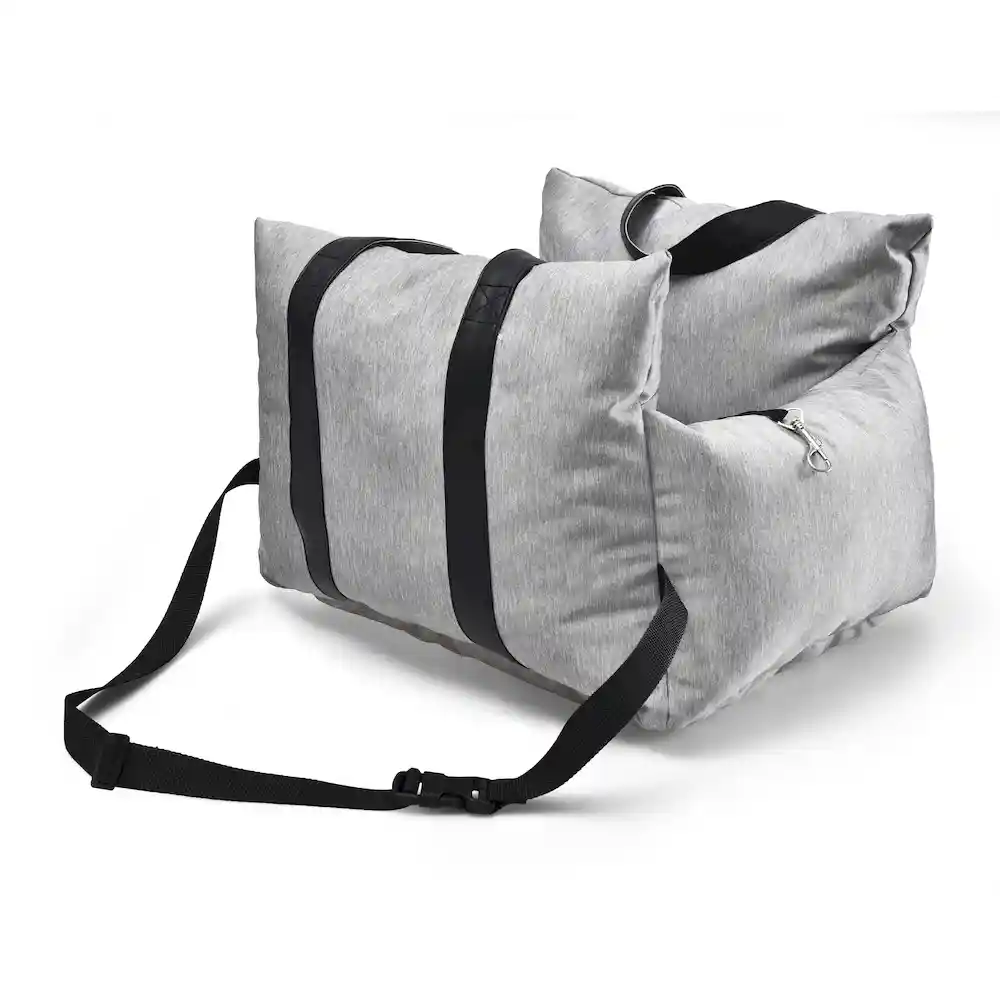
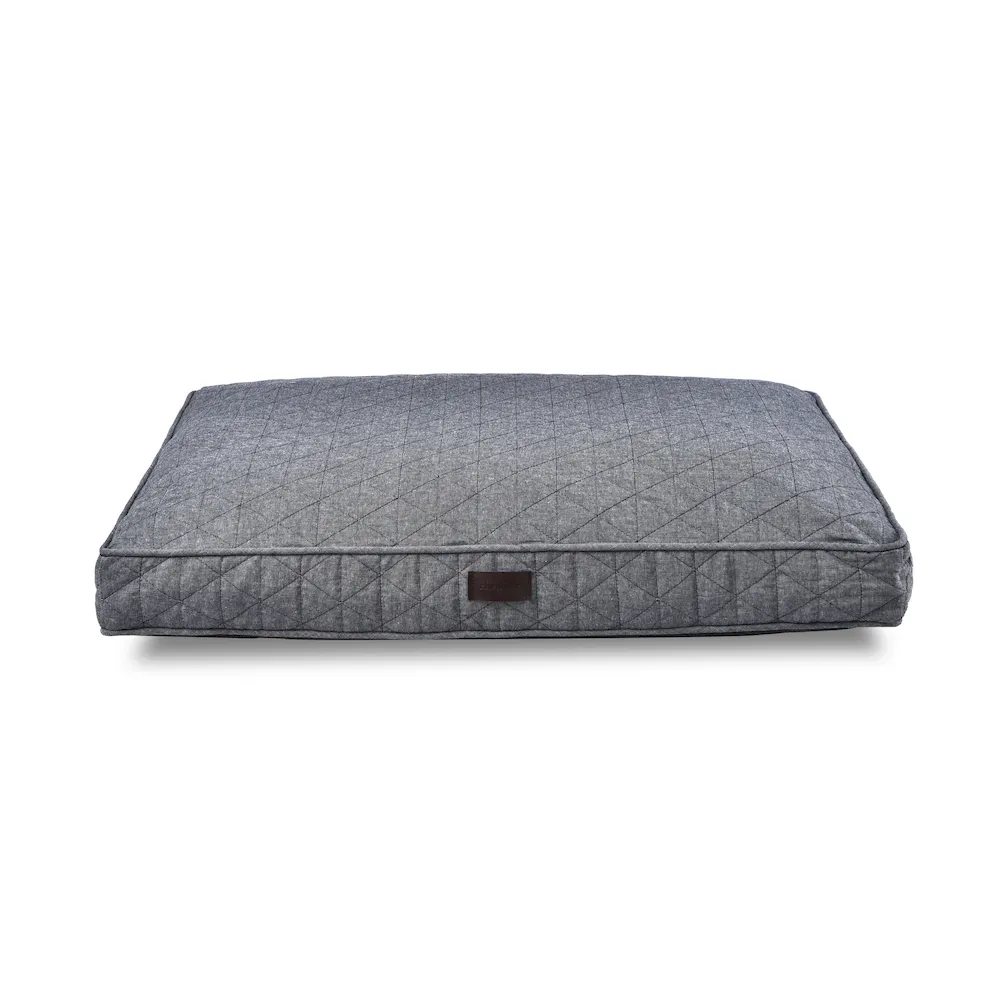
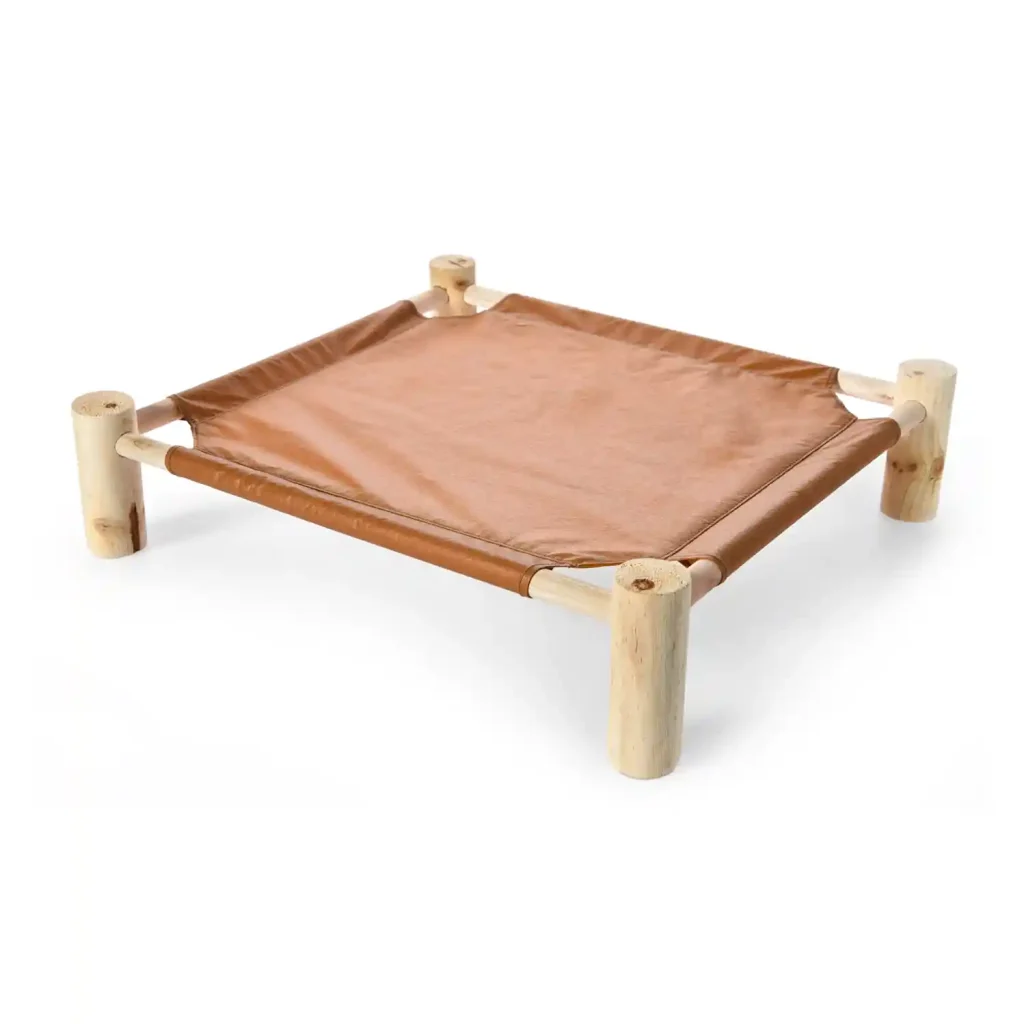
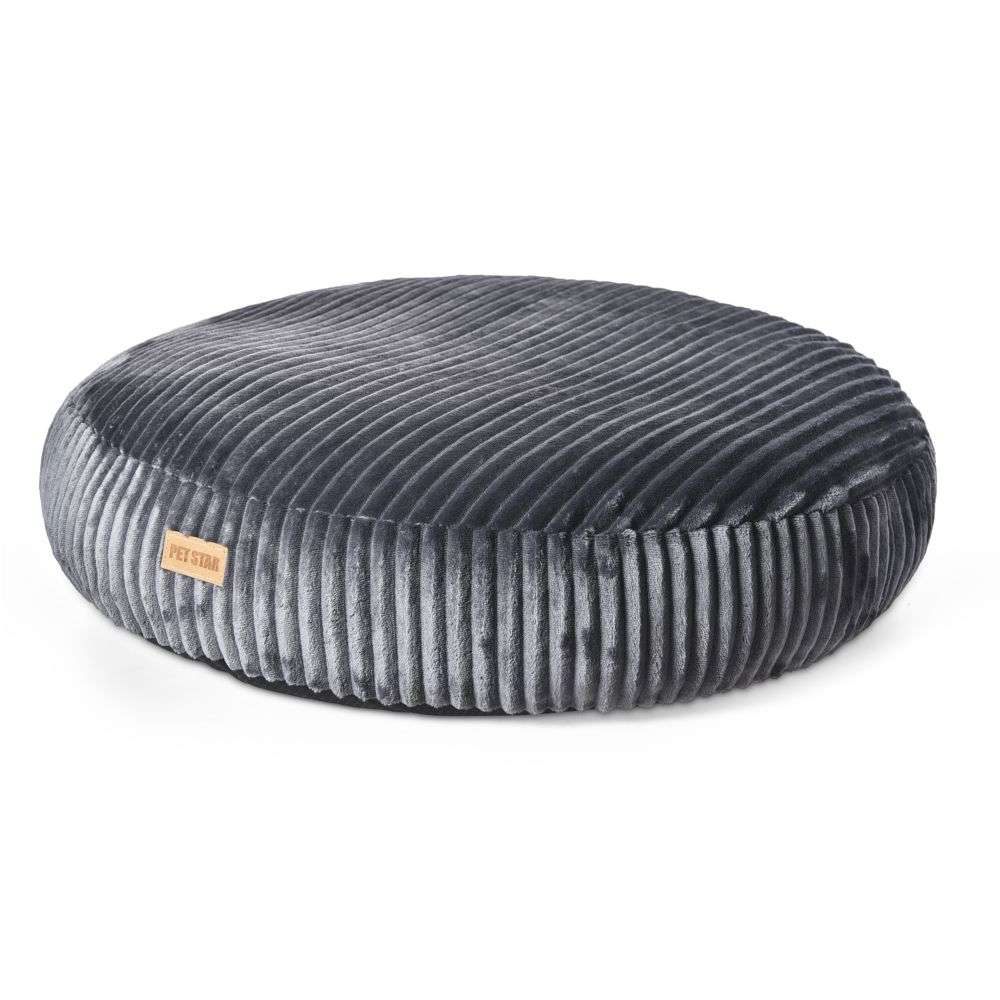
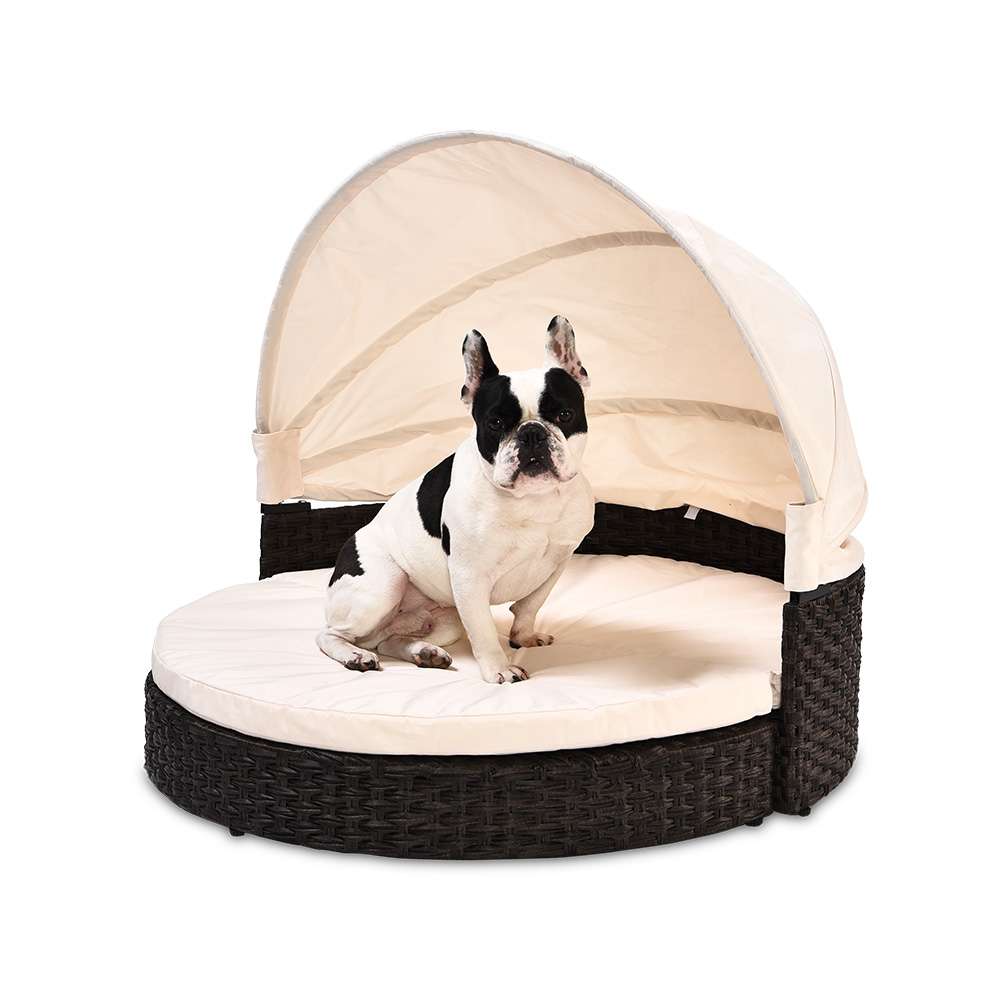
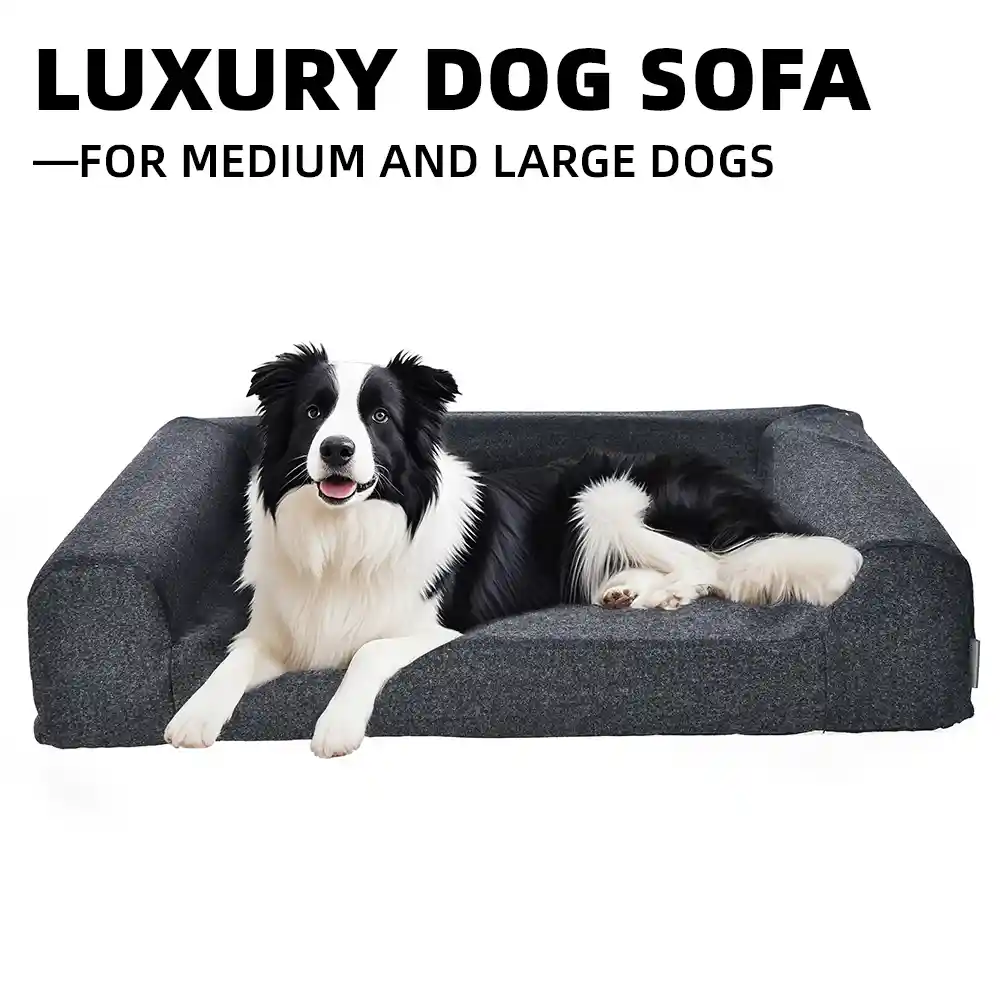
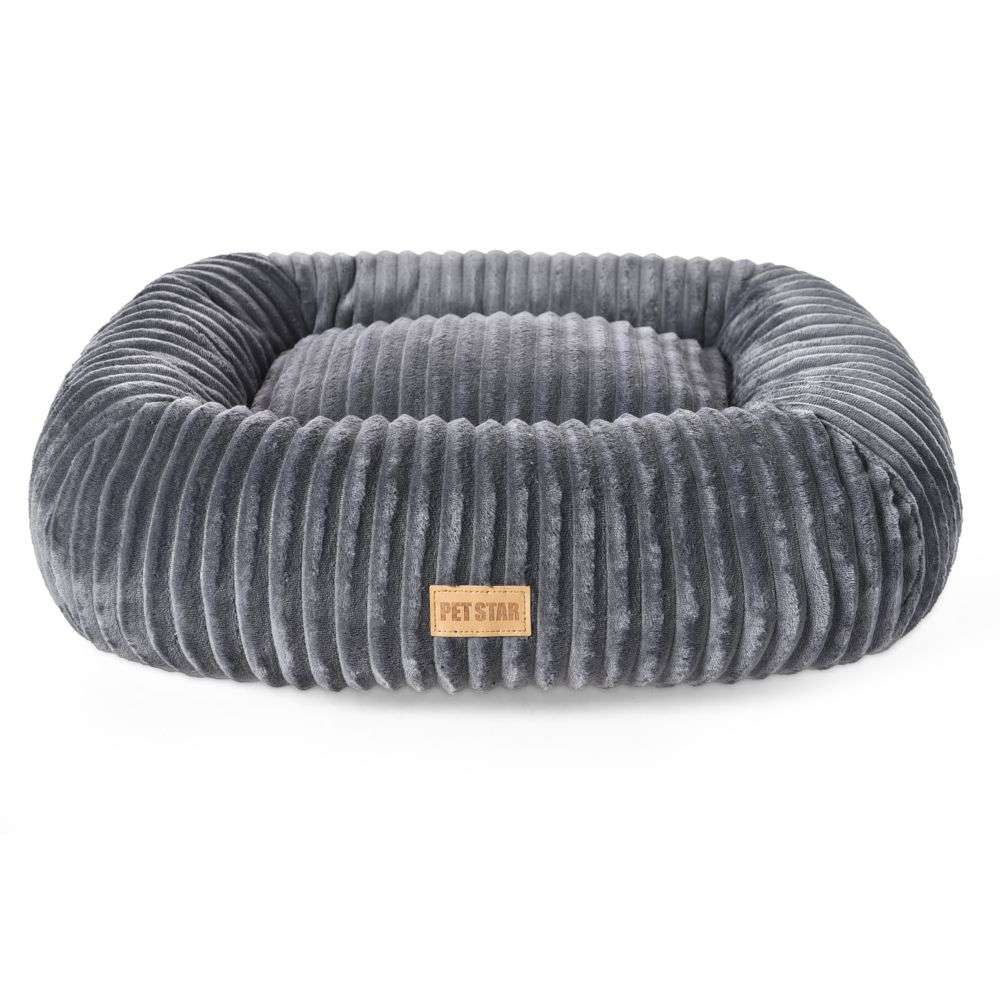
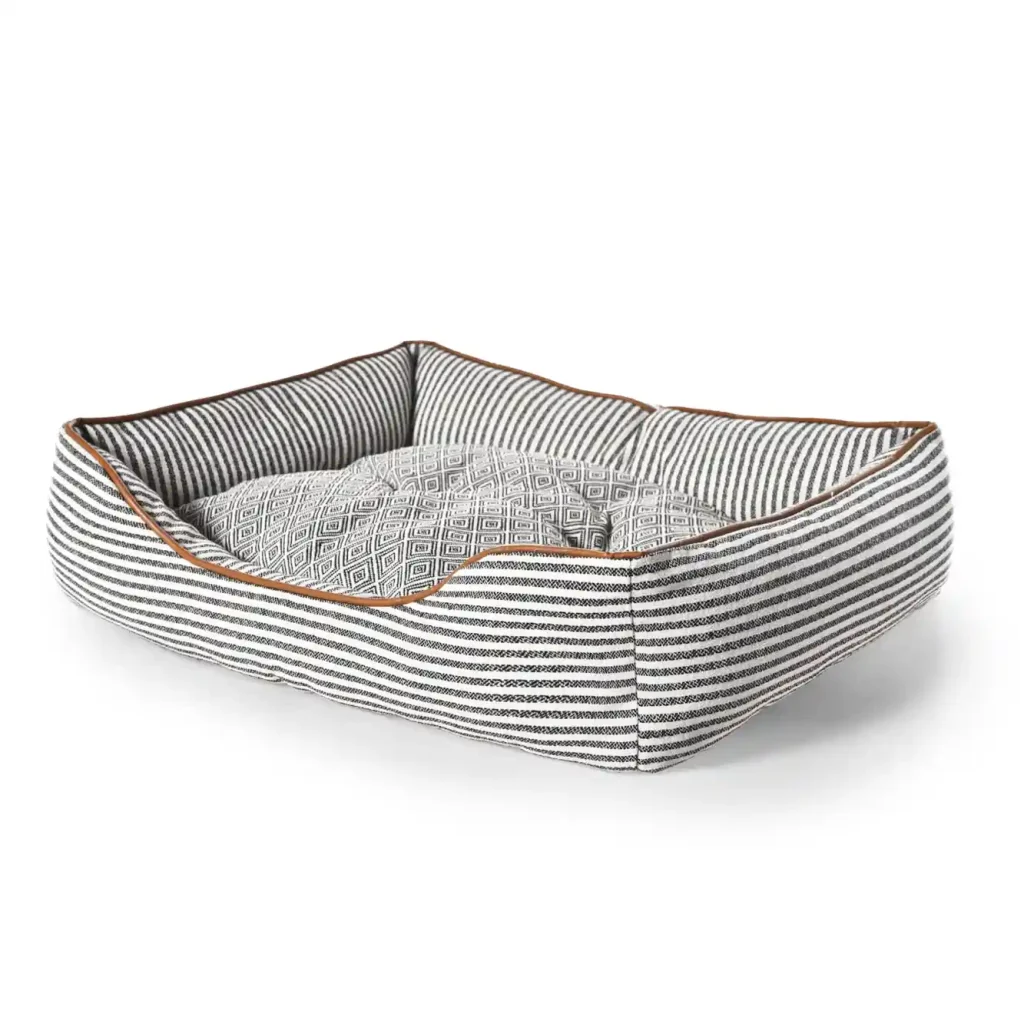
How Bed Shape Changes a Large-Size Specification
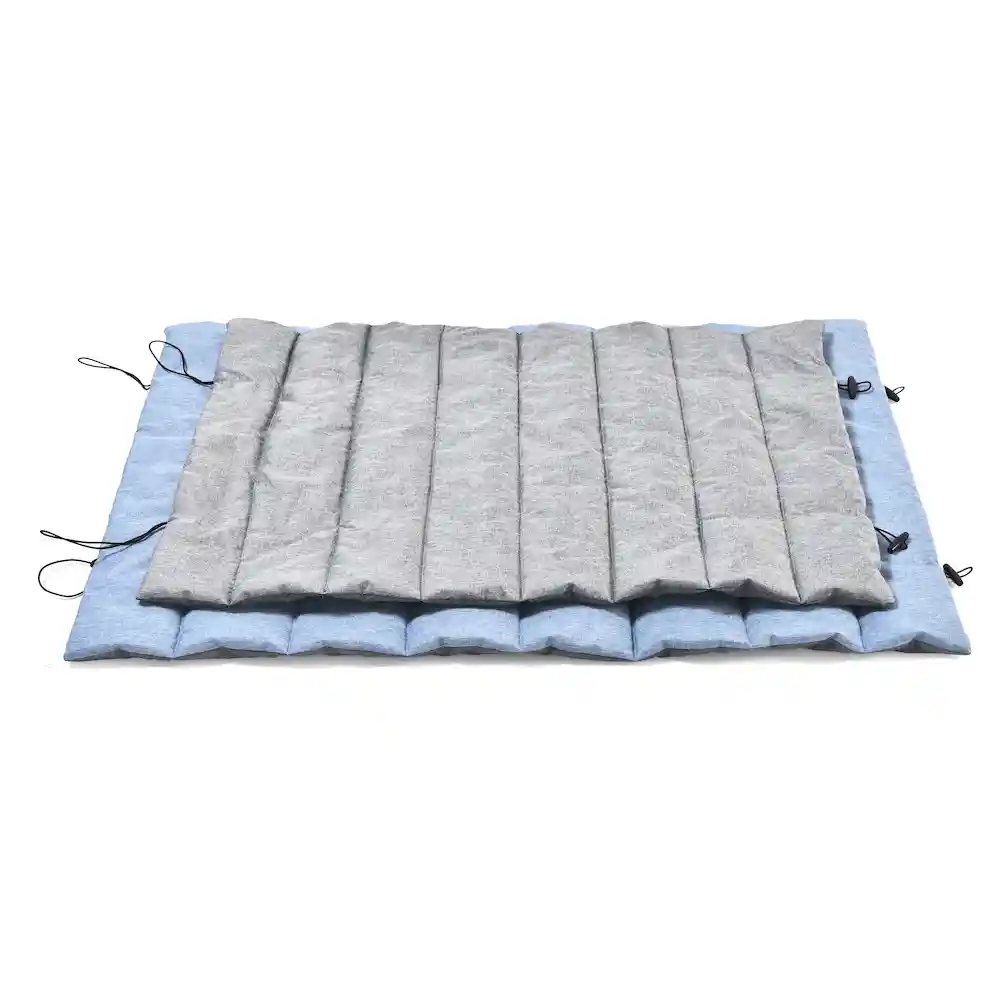
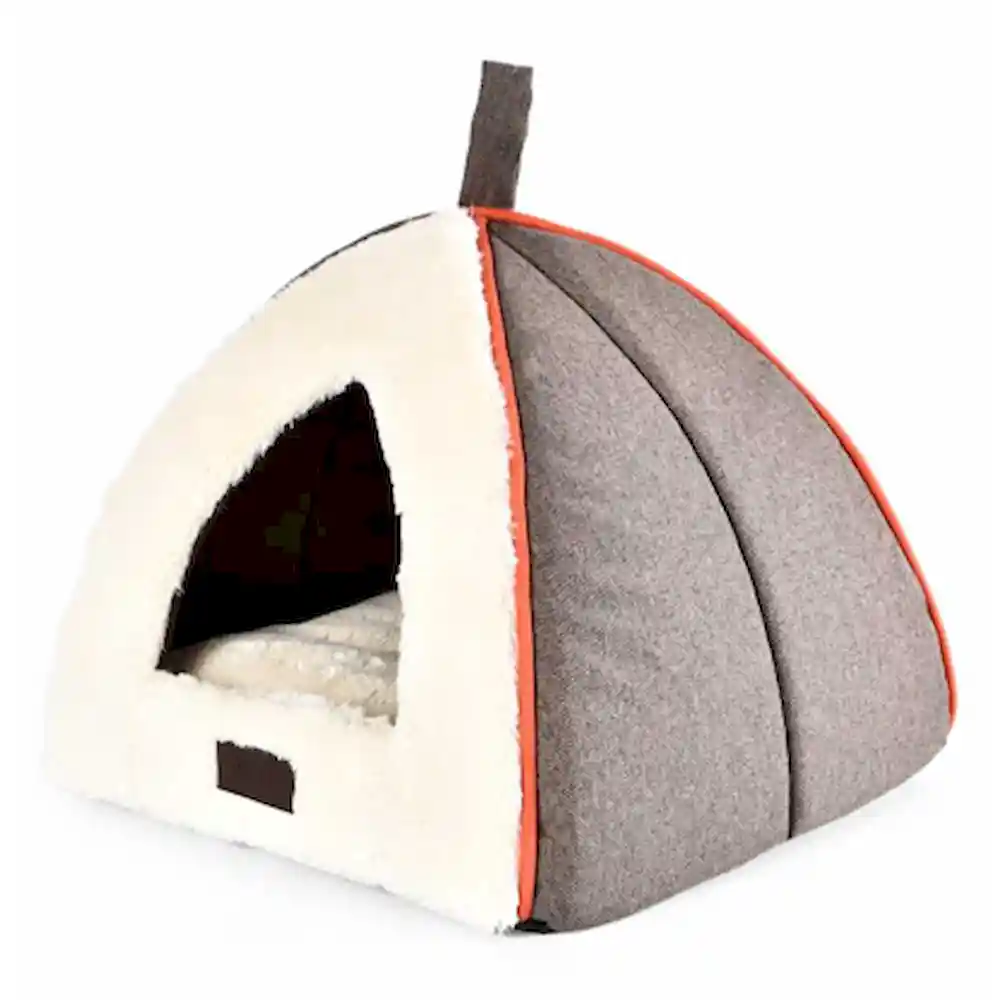
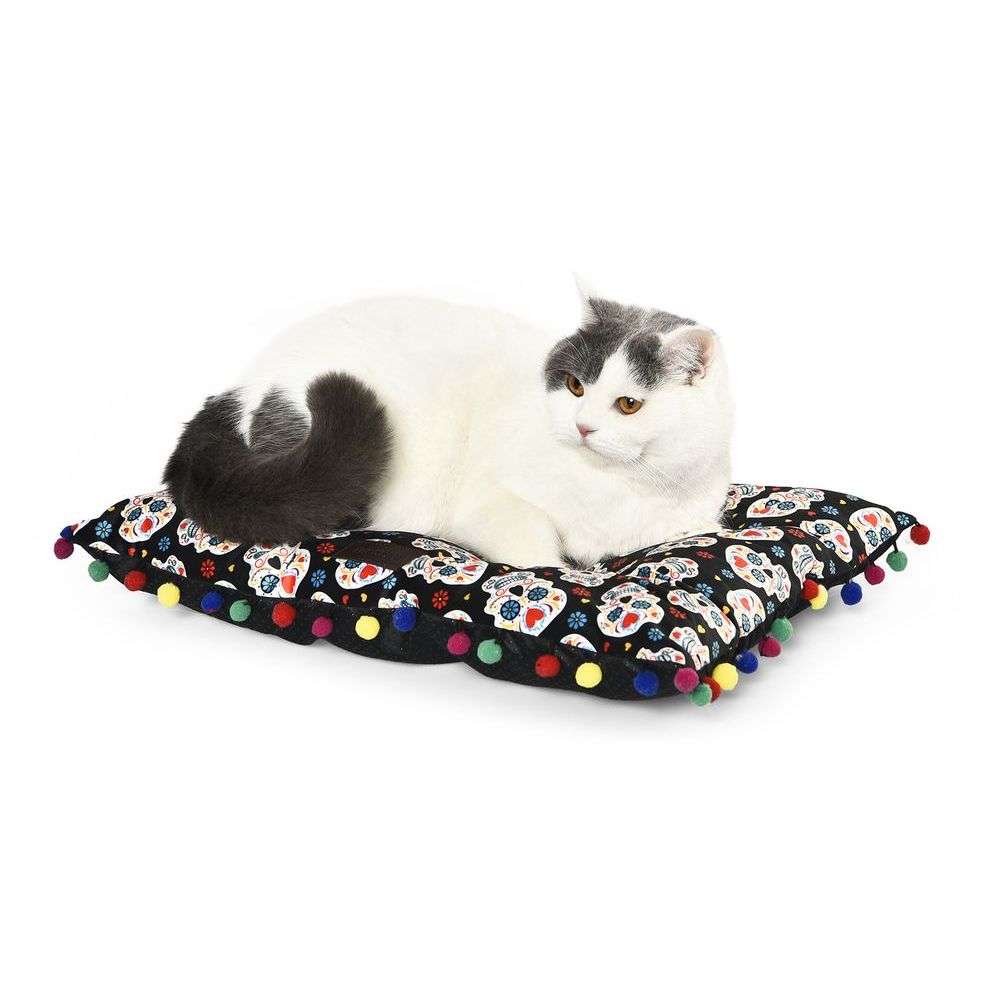
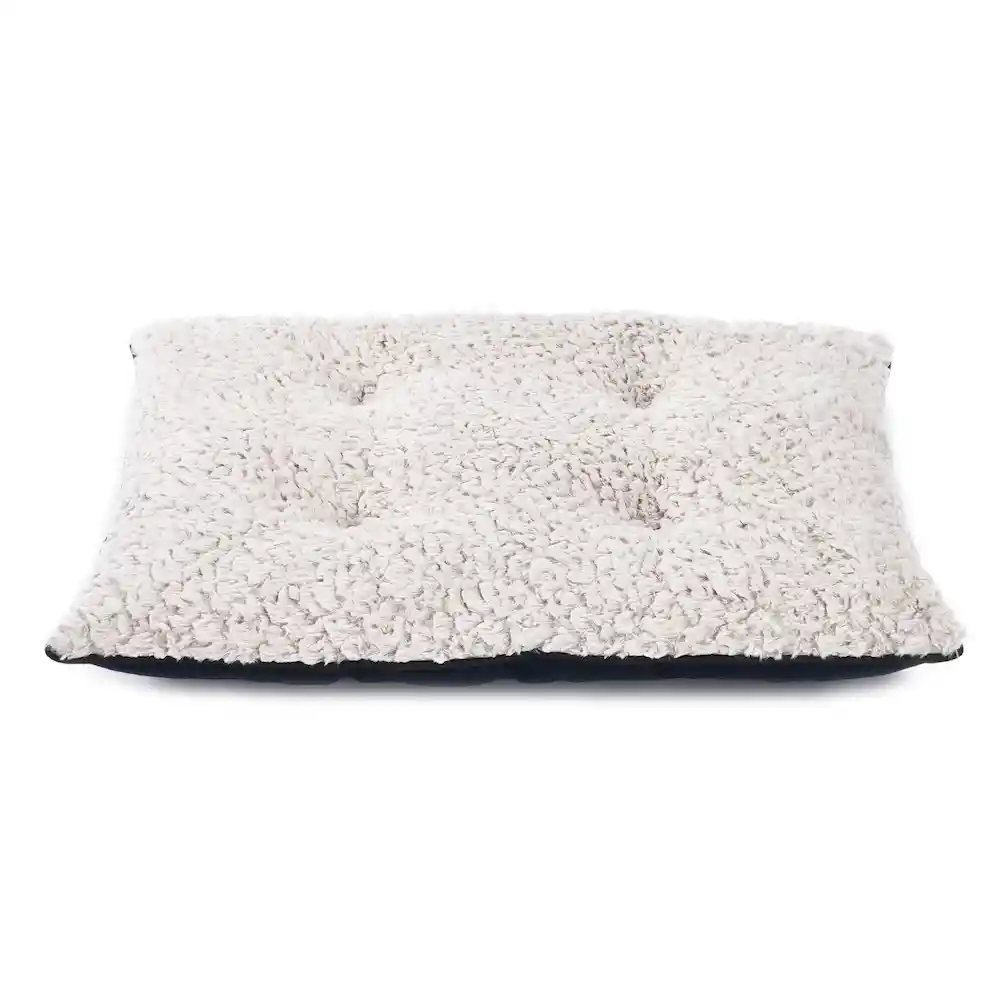
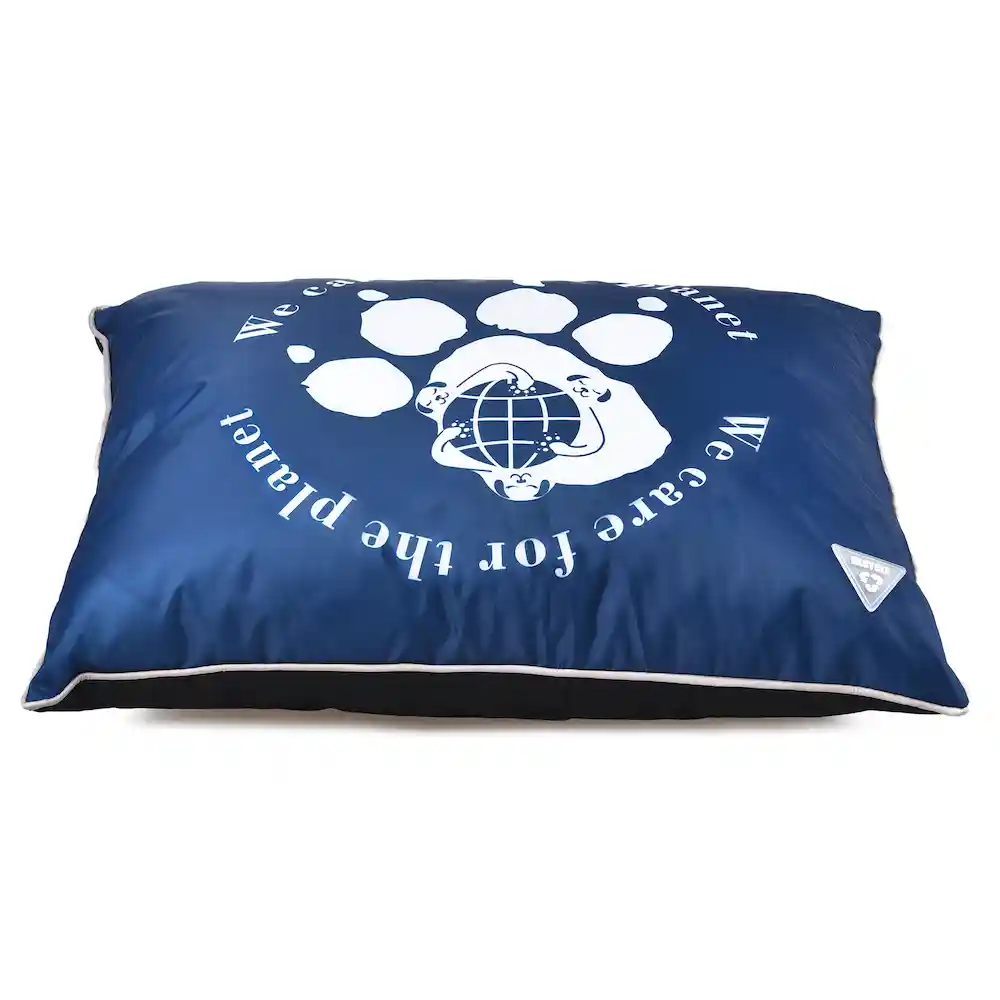
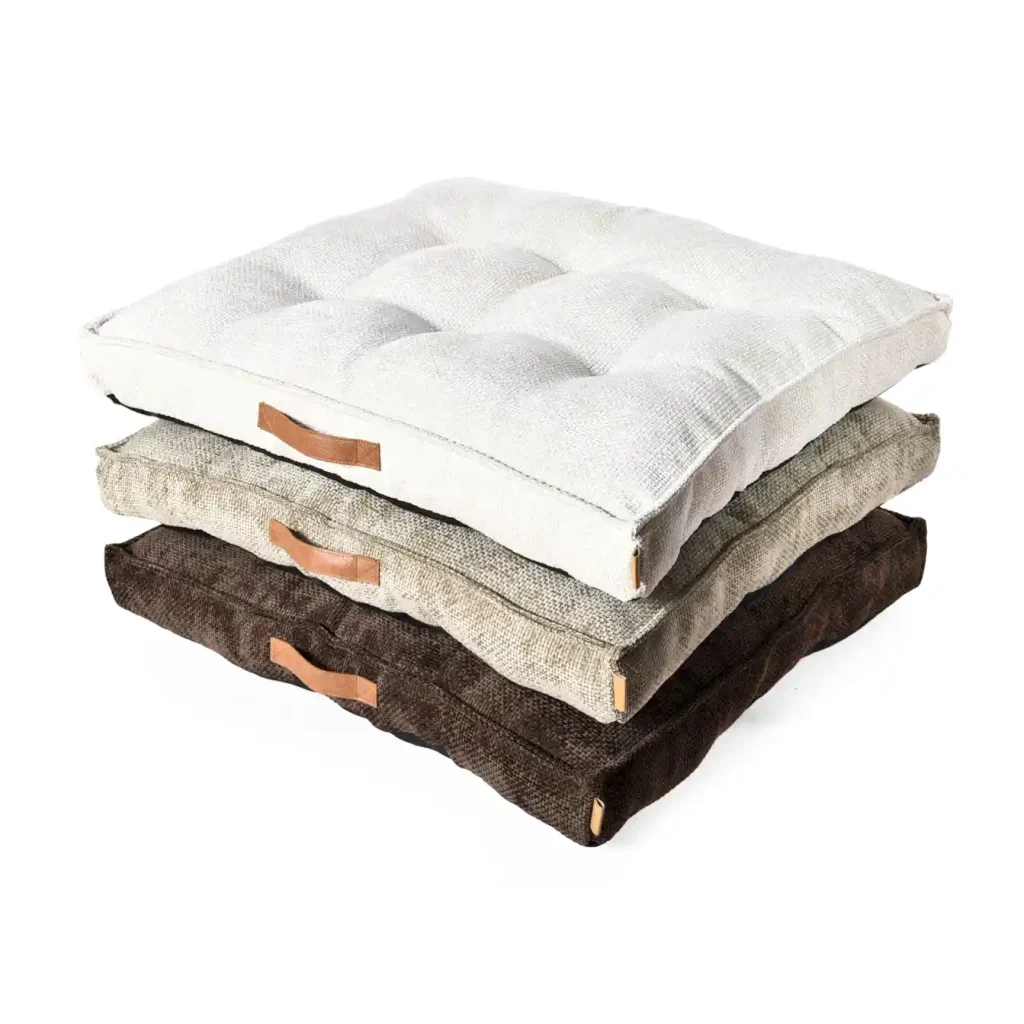
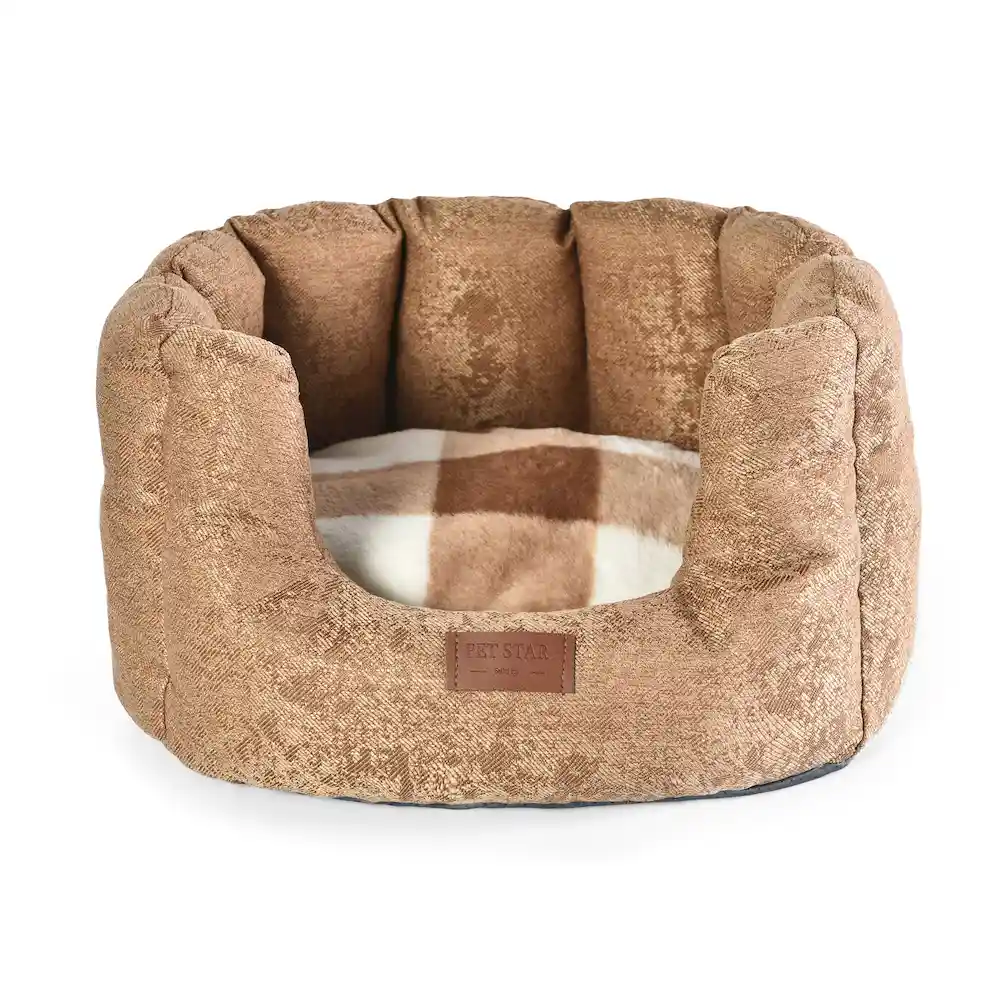
The same large-size positioning can be built in different shapes. A flat mattress and a bolster construction use their external footprint differently, so increasing length and width is not the only way to create a larger usable product format.
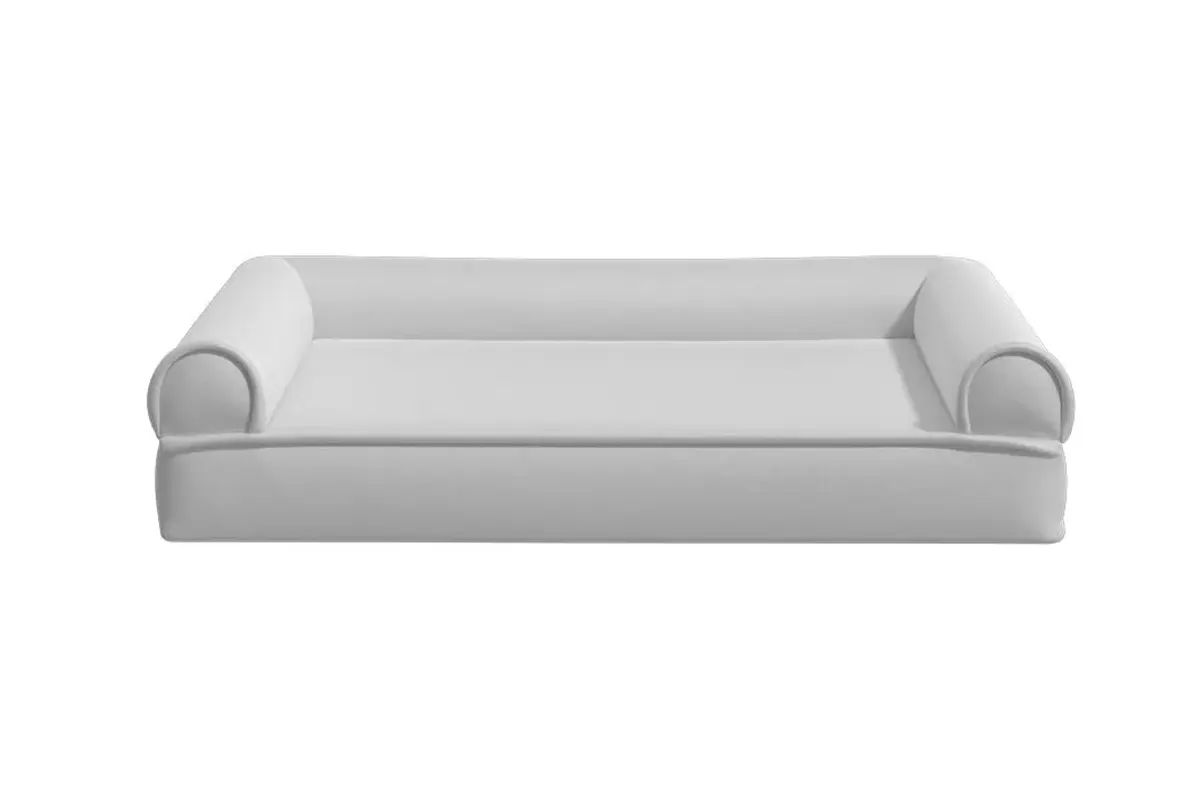
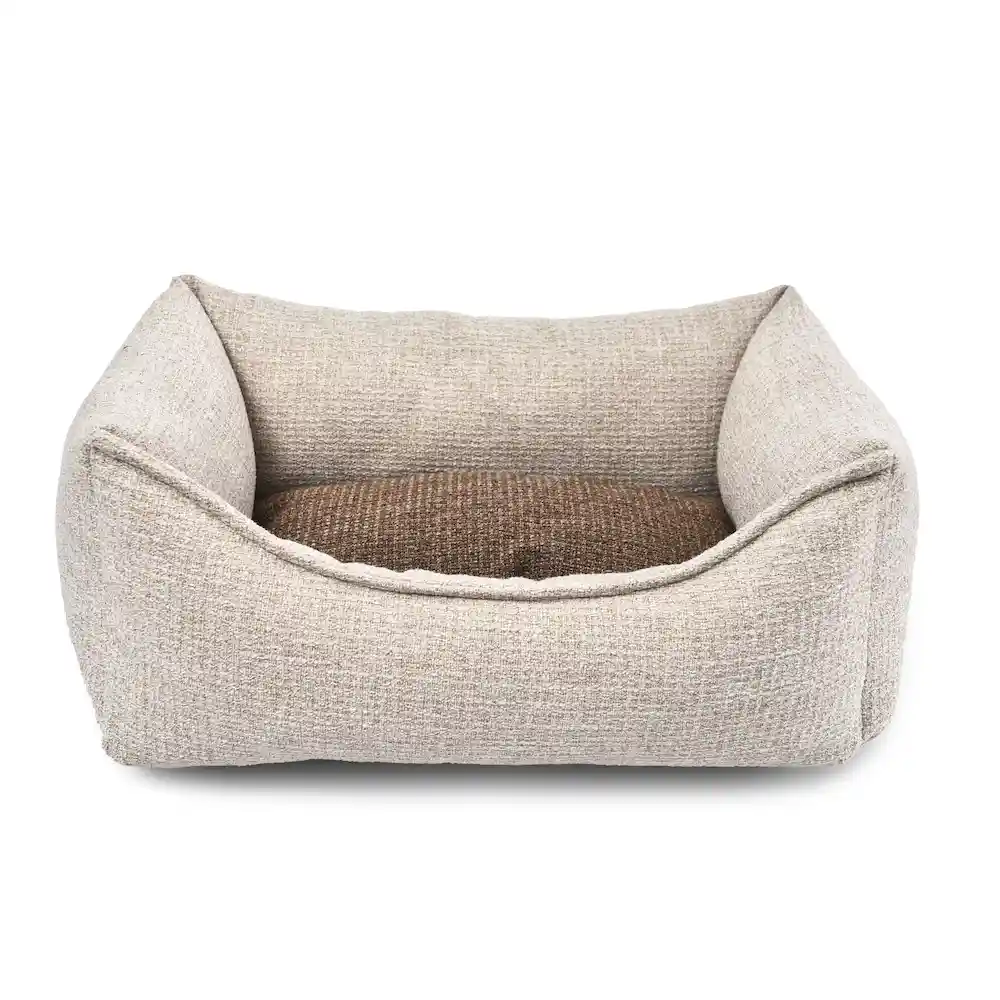
Long Sofa Bolster Bed
A long sofa profile combines a larger footprint with raised supporting sections and a more furniture-like appearance.
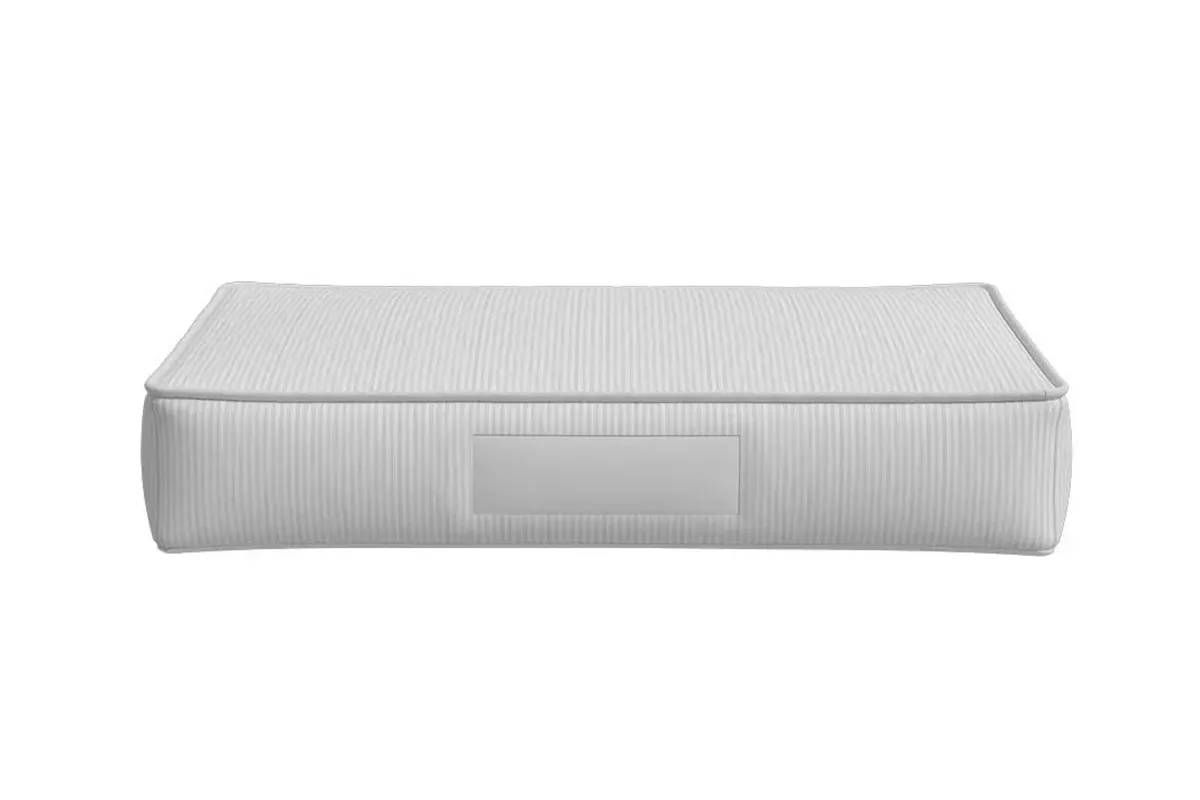
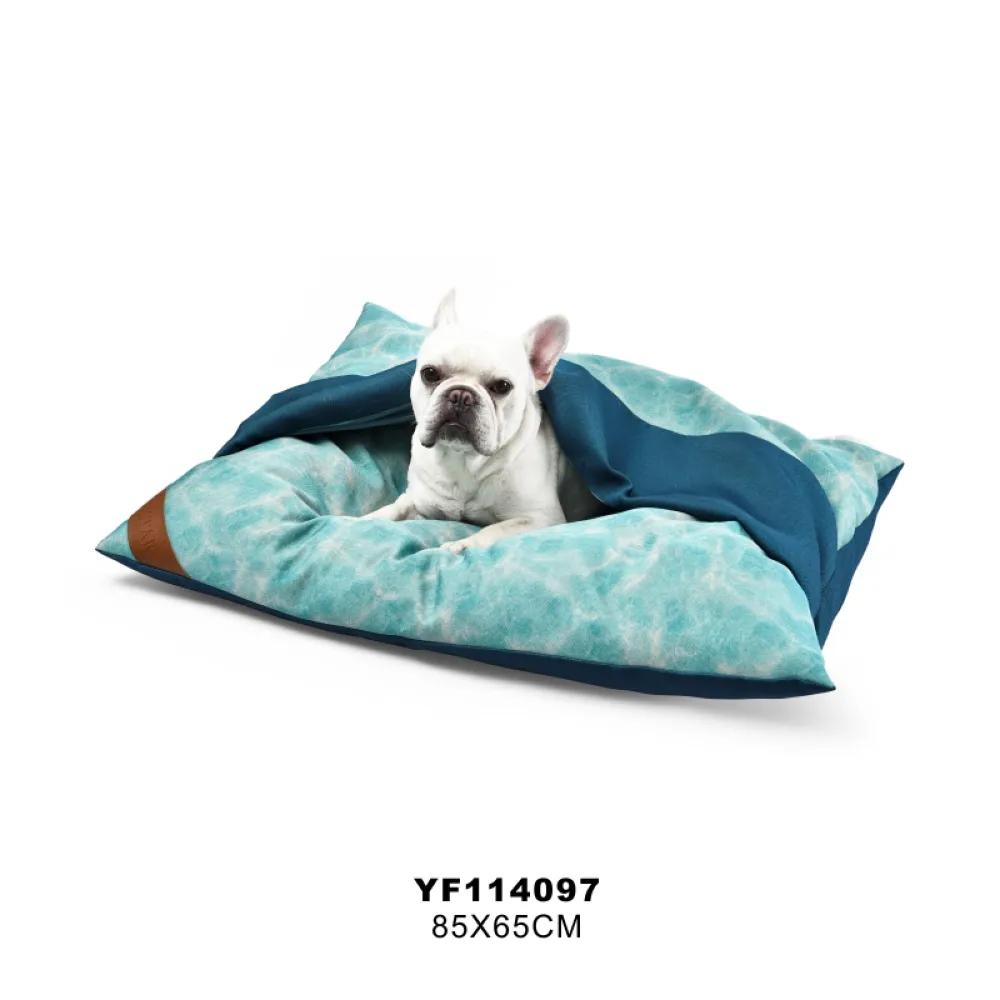
Flat Rectangular Mattress
A flat construction keeps the upper surface open, making it useful when the project prioritizes an unrestricted lying area.
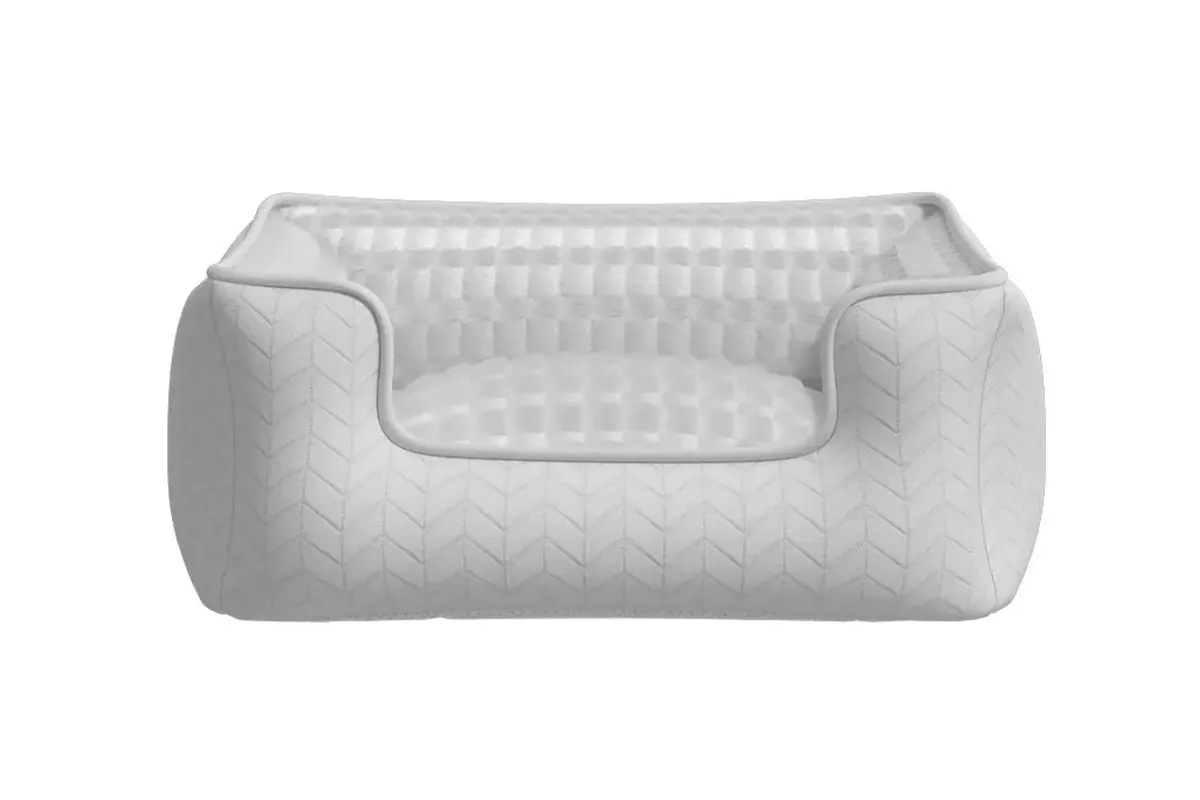
Rectangular Bolster Bed
Raised surrounding sections change how the footprint is used, so bolster size and center construction should be reviewed together.
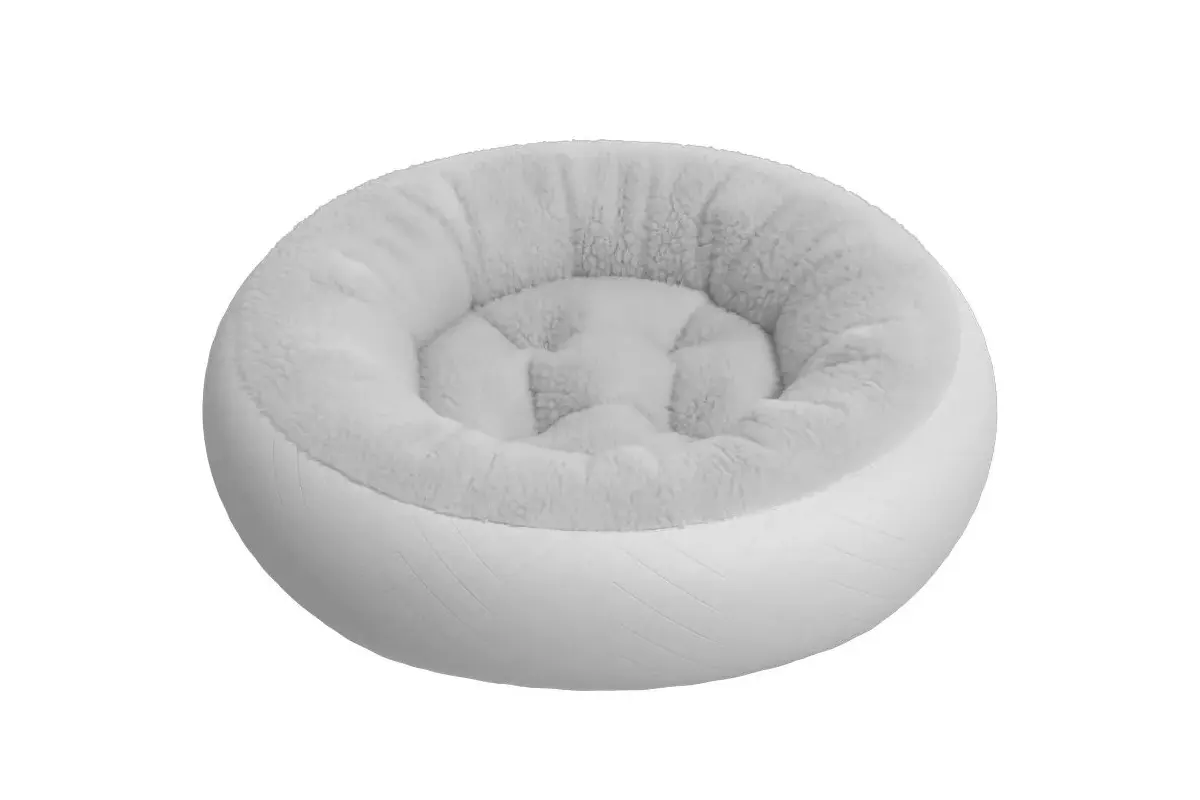
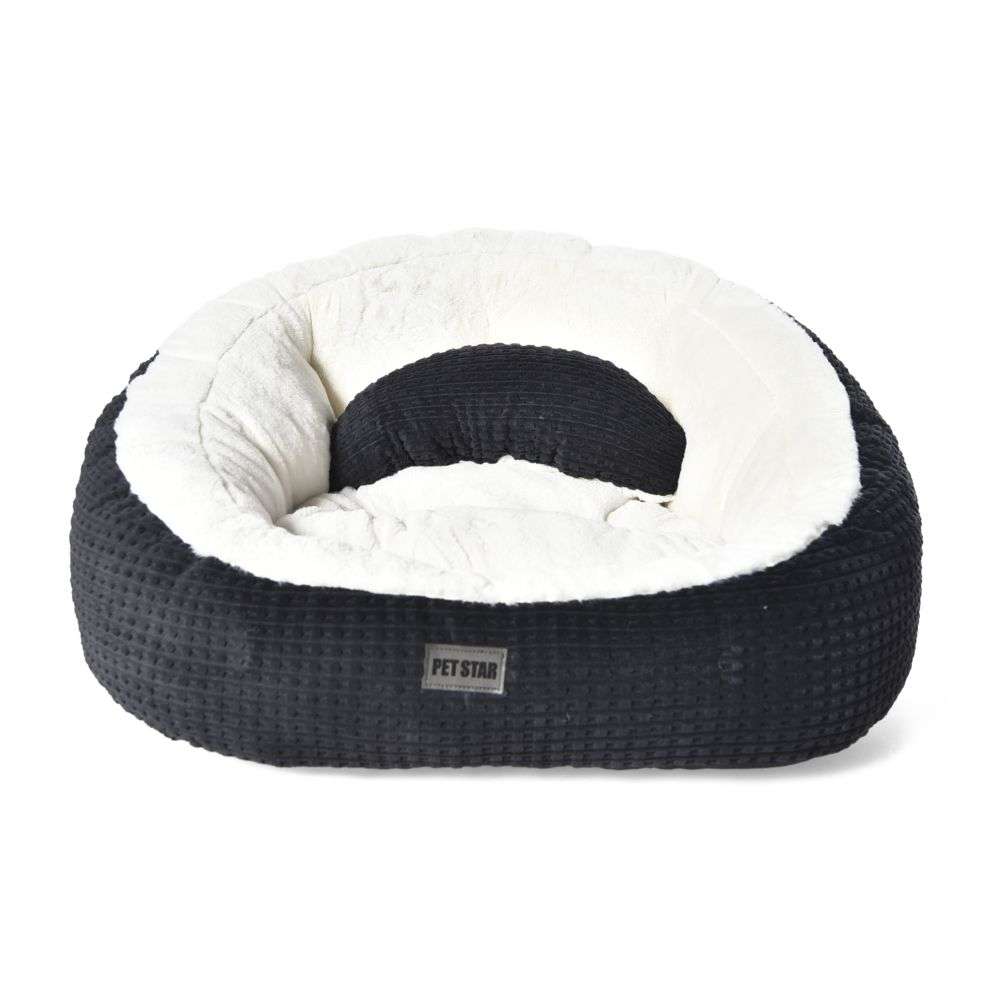
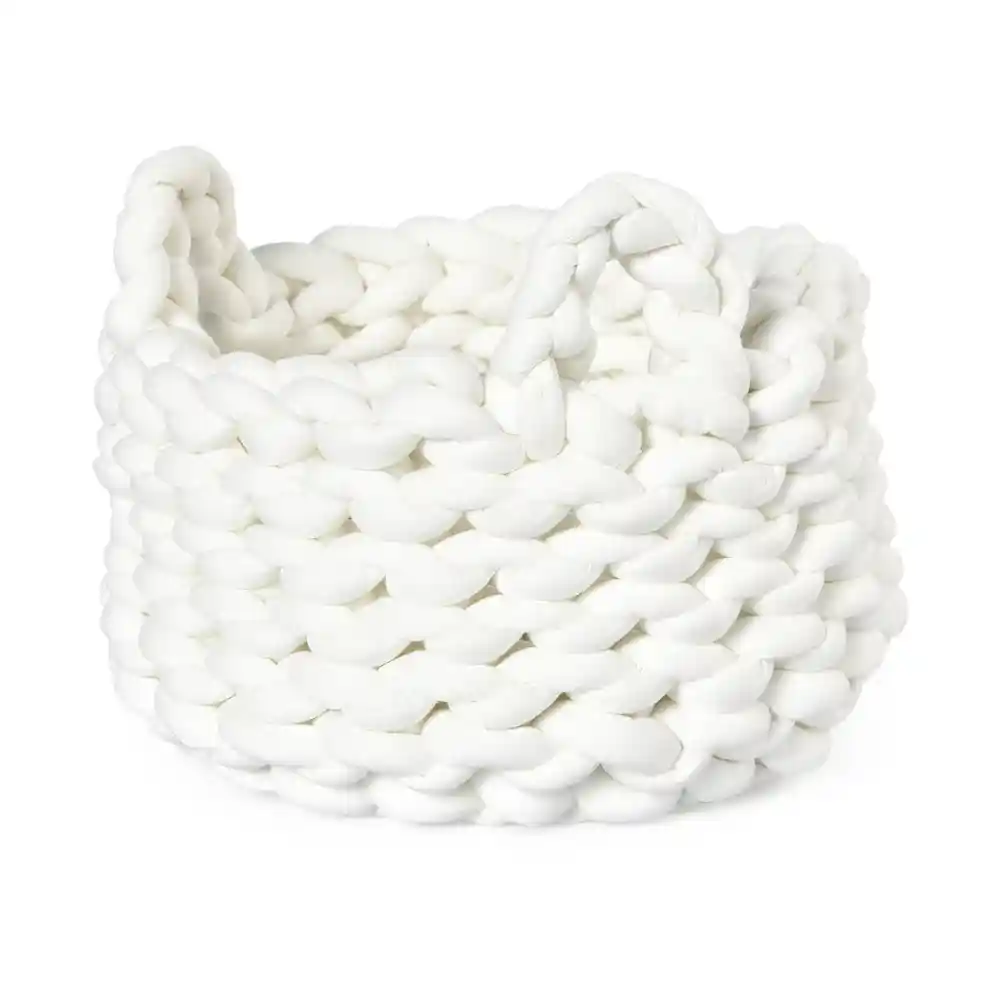
Round Bed
Round beds use diameter rather than rectangular length × width, so the construction itself becomes part of the sizing decision.
If a buyer needs more open lying area, increasing the external dimensions is not always the only solution. Changing from a heavily bolstered shape to a flatter construction can also change how the available footprint is used.
Size, Filling and Target Cost Must Be Evaluated Together
Increasing the footprint without reconsidering filling is one of the specification problems that can appear during large dog bed development.
Factory Example: Large Size + Low Target Price + PP Cotton
A buyer may request a large finished size while also targeting a low price and specifying PP cotton as the filling.
PP cotton can work well in a cost-conscious program, but simply making the bed longer and wider without adjusting the filling quantity or thickness can create a product that no longer matches the intended finished appearance or support level.
When our production experience indicates that the combination is unsuitable, two common adjustment directions are:
- Reduce the finished dimensions so the product remains closer to the intended cost structure.
- Increase thickness and filling quantity to better match the larger footprint.
Which option is appropriate depends on the buyer's budget and product positioning rather than a single universal filling rule.
175 × 105 × 28 cm Human-Size Dog Bed: A Mass-Production Case
Large-size development can extend far beyond conventional L or 2L models. ITEM YF142264 is a repeat bulk-production example with finished outer dimensions of 175 × 105 × H28 cm.
This orthopedic human-size dog bed has moved beyond sampling into repeated mass production and represents a mature oversized construction rather than a concept-only prototype.
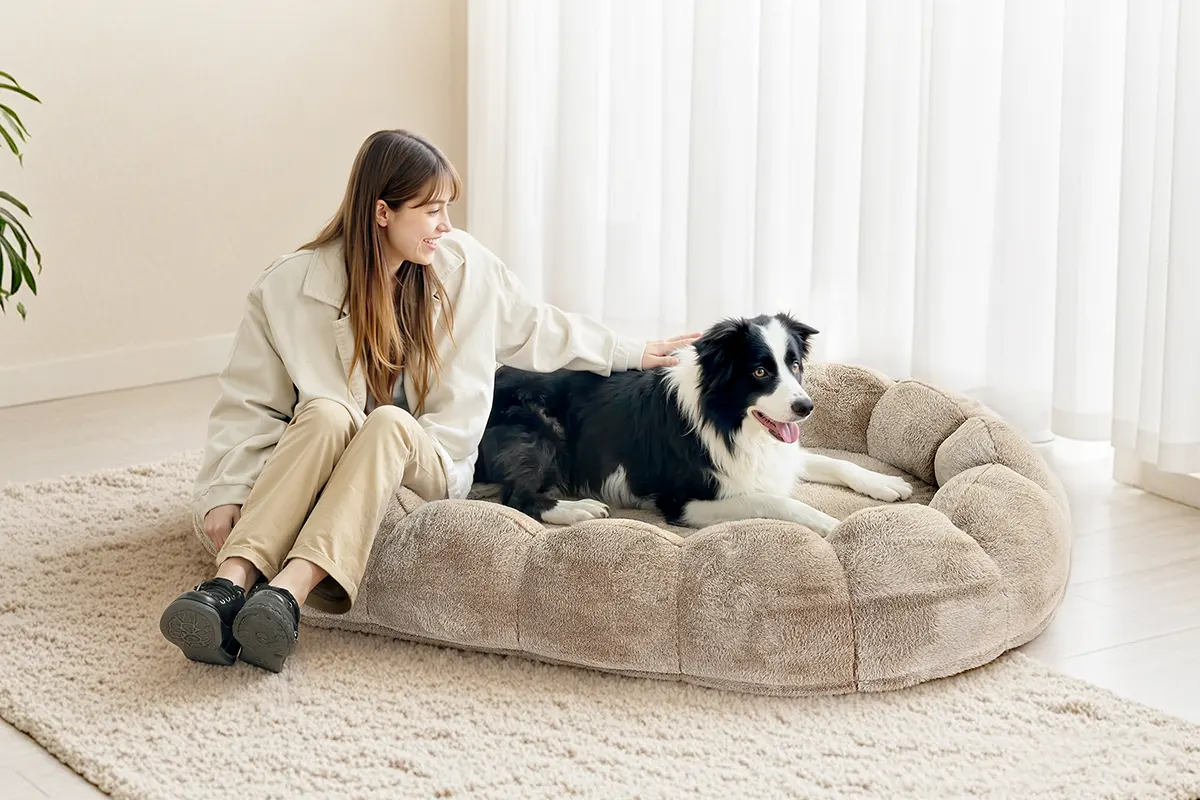
The purpose of this example is not to suggest that every extra large dog bed should use the same material system. Instead, it shows why dimensions, filling architecture, product positioning and packaging need to be developed together when the footprint becomes significantly larger.
For related support constructions, see our Orthopedisch Hondenbed Fabrikant programma.
Can a 175 cm Dog Bed Still Be Compression-Packed?
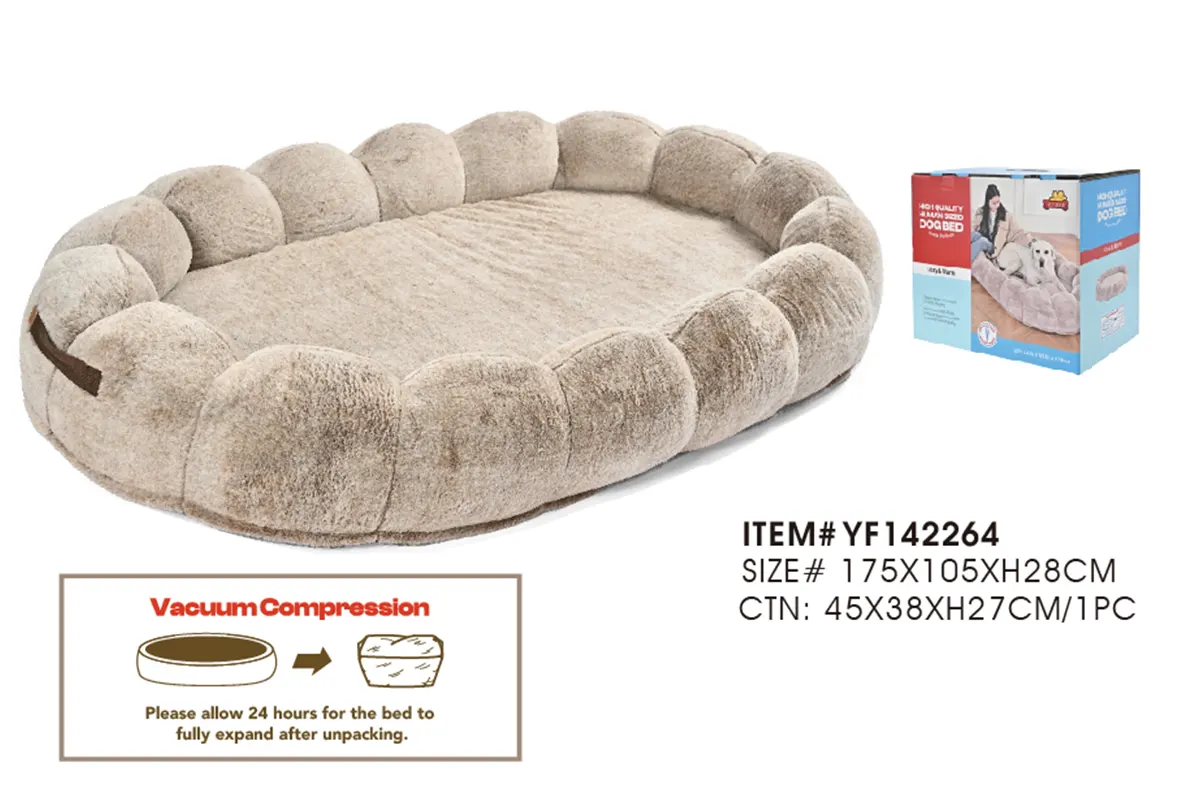
Yes. An oversized finished dimension does not automatically mean the bed must ship at its expanded volume. YF142264 is a useful production example because the finished product can still be compression-packed and supplied with customized retail color-box packaging.
1.75 × 1.05 × 0.28 = 0.5145 m³
Compressed package volume:
0.45 × 0.38 × 0.27 = 0.04617 m³
Packed volume ÷ finished outer-envelope volume:
0.04617 ÷ 0.5145 ≈ 8.97%
For general sourcing calculations, 40–60% CBM reduction is a more conservative planning range for compression-packed pet beds. Final carton dimensions should always be calculated against the actual product and packaging configuration.
For a deeper discussion of oversized-product logistics, see Hoe u de verzendkosten voor grote hondenbedden kunt verlagen.
From Buyer Dimensions to an OEM Sample
Custom dimensions are a normal part of OEM/ODM pet bed development. A useful RFQ should ideally give the factory enough information to evaluate more than length and width alone.
- Target finished dimensions or a reference product if the dimensions are not fixed.
- Bed construction, such as flat mattress, sofa bolster, rectangular bolster or round bed.
- Target filling or support positioning, including whether cost efficiency or more structured support is the priority.
- Target cost positioning so size and material combinations can be reviewed realistically.
- Packaging requirement, particularly when an oversized footprint makes CBM important.
- Target market or retail reference if the range is being developed around an existing marketplace or assortment.
If the buyer already has a complete specification, it can be reviewed before sampling. If not, existing Large, 2L and 3L production models can provide a starting point.
Factory sourcing reference: standard MOQ is 300 PCS per design, color and size profile. Fast-track sampling is typically 3–7 days, depending on the specification and material requirements.
Common Large Dog Bed Sizing Mistakes in B2B Development
Using L, XL or 2L as the Complete Specification
Size labels are useful inside a product range, but actual finished dimensions are required when comparing suppliers, confirming samples or developing packaging.
Increasing Length and Width Without Reviewing Filling
A larger PP-cotton bed may require greater thickness or more filling. If the target cost cannot support that adjustment, reducing the footprint may be the more practical direction.
Comparing Different Shapes Only by External Size
A flat mattress, sofa bolster, rectangular bolster and round bed use their footprints differently. Shape and dimensions should therefore be reviewed together.
Considering Shipping Only After the Sample Is Finished
Packaging should be part of product development rather than a last-stage logistics decision. Oversized models such as YF142264 demonstrate why construction and compression need to be considered together.
Copying One Large-Size Construction Across Every Price Tier
A cost-conscious PP-cotton range and a structured orthopedic program are developed around different material and filling assumptions. The same size does not require the same construction.
Veelgestelde vragen
What dimensions are considered a large dog bed?
There is no single factory dimension represented by “Large.” For example, YF147022 uses 100 × 70 × H14 cm for L, while the L version of bolster model YF125128 is 90 × 70 × H20 cm. For B2B sourcing, compare the actual dimensions and construction rather than relying on the L label alone.
Are XL, XXL, 2L and 3L dog bed sizes standardized?
They should not be treated as interchangeable specifications. Size tokens can vary between product series, so RFQs and sample approvals should state the actual required dimensions in centimetres or inches.
How should I choose a large dog bed size for a private-label range?
Start with the information already available: target dimensions, competitor reference, target breed or weight, marketplace reference, or an existing factory model. Then review the proposed size together with shape, filling, thickness, cost positioning and packaging.
Does a larger dog bed need more filling?
Increasing the footprint without reconsidering filling can change both support and finished appearance. In PP-cotton constructions, the factory may recommend increasing thickness and filling quantity or reducing the proposed footprint, depending on the buyer's target cost.
Can you manufacture a 175 cm extra large dog bed?
Yes. YF142264 is a repeat bulk-production example measuring 175 × 105 × H28 cm. Its construction combines faux rabbit fur, cotton, shredded foam, egg-crate foam, separate inner liners, zipper access and an anti-slip bottom.
Can extra large dog beds be compression-packed?
Yes, but compression performance depends on the product. One YF142264 configuration packs to approximately 45 × 38 × 27 cm from a finished outer size of 175 × 105 × H28 cm. For general sourcing calculations, 40–60% CBM reduction is a more conservative planning reference than applying this individual case to every model.
Can large dog bed dimensions be customized?
Yes. Custom dimensions can be developed through OEM/ODM sampling. Standard MOQ is 300 PCS per design, color and size profile, with fast-track sampling typically taking 3–7 days. If the requested size, filling and target cost do not work well together, the specification can be adjusted before mass production.
Build the Size Around the Product, Not the Label
For B2B buyers, the right large dog bed size is not determined by whether a catalog calls the product L, XL, 2L or 3L.
Existing production models such as YF147022 and YF125128 provide practical starting dimensions. Oversized programs such as the 175 × 105 × H28 cm YF142264 show how far the concept can be extended when filling architecture and compression packaging are developed together.
Developing a Large or Extra Large Dog Bed Range?
Send us your dimensions, reference product, target price positioning and preferred construction. We can review the specification against existing production models before sampling.
Request OEM Size Review